Why a Kit Matters
A typhoon can cut power, water and mobile signal for days. A prepared household keeps phones charged, has clean water and food on hand and can move quickly if evacuation is needed. The core go-bag lists published by news outlets and agencies are similar: water, food, light, power, first aid, medicines, documents and cash.
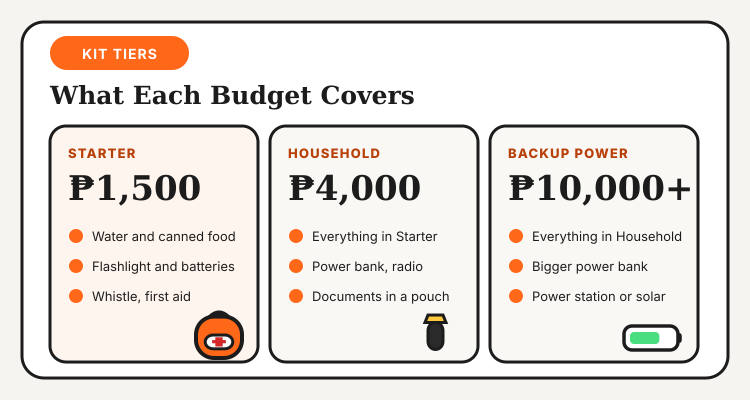
What Each Budget Covers
| Item | Typical price range | Notes |
|---|---|---|
| Drinking water (3 days) | ₱200 to ₱400 per person | Plan about 3 liters per person per day |
| Canned and ready-to-eat food | ₱400 to ₱800 per person | Choose items that need no cooking |
| Flashlight and batteries | ₱300 to ₱700 | Add a rechargeable lamp if you can |
| First-aid kit and medicines | ₱300 to ₱1,000 | Include any prescription medicines |
| Power bank | ₱800 to ₱3,500 | Choose a larger capacity for longer outages |
| Battery radio | ₱400 to ₱900 | Stay updated when signal is down |
| Documents pouch and cash | ₱100 to ₱300 | Waterproof bag, small bills |
| Power station | ₱12,000 and up | For a fridge, fan or Wi-Fi for hours |
These are rough planning ranges. Prices change by store and season.
Keeping the Lights On: Your Power Options
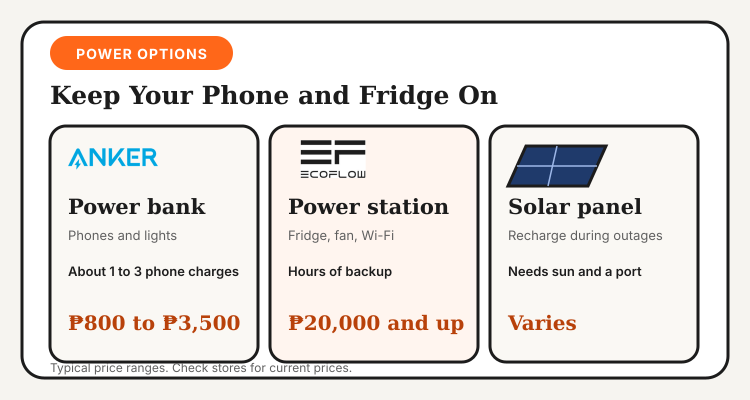
A power bank keeps your phone and a small lamp running. Pick a larger capacity for longer outages and recharge it before the storm.
A portable power station can run a fridge, fan or Wi-Fi for hours. Size it with our battery backup calculator.
A foldable solar panel can recharge a power station in the day, but it needs sun and the right input. See our solar guides.
Size a backup with the solar battery backup calculator, read the EcoFlow 11.11 sale guide and our DIY rooftop solar guide. For power banks, see the best power banks in the Philippines.
Before, During and After the Storm
Before the typhoon
- Charge your phones and power banks.
- Check your go-bag and replace expired items.
- Fill containers with water and keep documents in a waterproof pouch.
During the typhoon
- Stay indoors and follow official advisories.
- Use flashlights instead of candles.
- Save phone battery by lowering brightness.
After the typhoon
- Avoid floodwater and fallen power lines.
- Boil or treat water if you are unsure it is safe.
- Restock your kit.
Save Money on Your Kit
- Buy water, canned goods and batteries in bulk during sale days. See our 11.11 Sale page.
- Reuse clean containers for water storage.
- Cut your electricity bill with our electricity saving tips.
Sources
Go-bag contents from Manila Bulletin and the UNICEF Philippines emergency go-bag checklist. For official advisories, check the OCD, NDRRMC and PAGASA.