What You Can and Cannot DIY
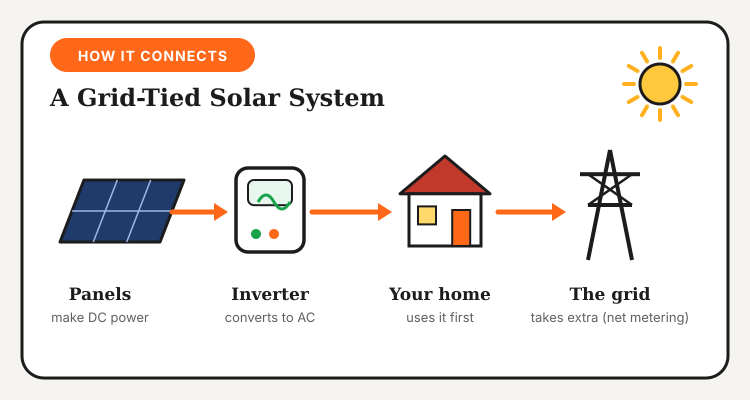
"DIY solar" in the Philippines usually means you do the planning, sourcing and some of the labor, while a licensed electrician handles the electrical connection. Grid-tied systems also need approval from your distribution utility under the net metering program, so you cannot simply plug panels into your house wiring. Off-grid and small portable setups have fewer steps, but they still need safe wiring and protection. Check the rules that apply to your area before you buy.
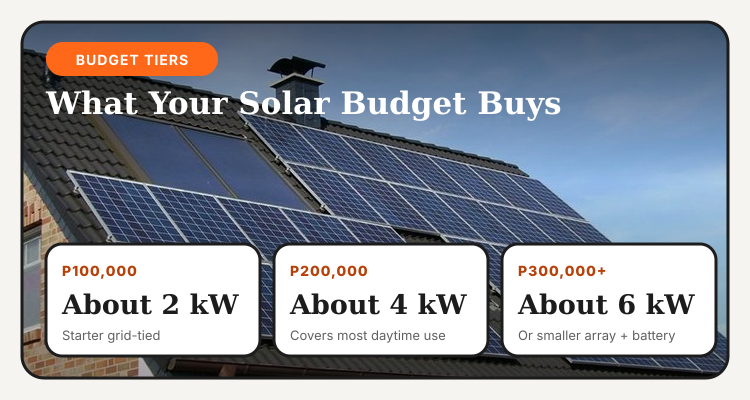
What Each Budget Tier Buys
The sizes below use about ₱50,000 per kW as a planning figure, based on installer guides that put installed grid-tied systems at roughly ₱44,000 to ₱52,000 per kW in 2026. DIY labor savings are possible, but they come with risk, so treat these as rough estimates and ask for quotes.
| Budget | Rough system size | What it covers |
|---|---|---|
| ₱100,000 | About 2 kW grid-tied | A small starter system for daytime use |
| ₱200,000 | About 4 kW grid-tied | Covers a large part of a typical home bill |
| ₱300,000 and up | About 6 kW grid-tied, or a smaller array plus battery | Bigger homes, or backup during outages |
Adding a battery reduces the panel size a budget can buy. Our solar system size calculator turns your bill into kW and panel counts, and the solar payback calculator shows the savings.
The Parts You Need
Tick off your shopping list:
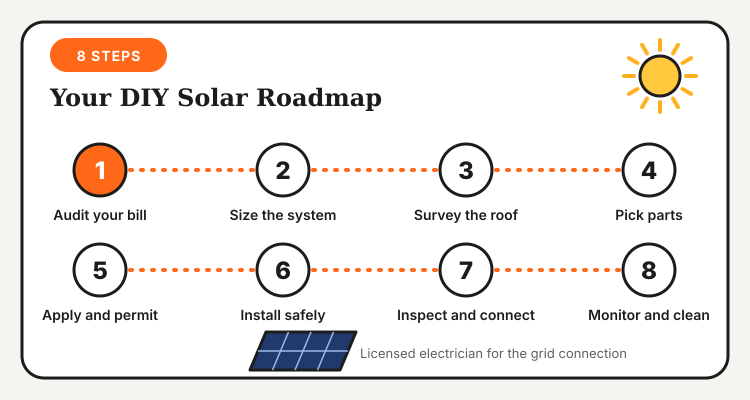
Your 8-Step DIY Roadmap
- Audit your bill. Note your monthly kWh and your rate per kWh.
- Size the system. Decide how much of your use to cover.
- Survey the roof. Check space, shade, angle and strength.
- Pick components. Compare panels, inverters and warranties.
- Apply and permit. Start the net metering and permit process early.
- Install safely. Use a licensed electrician for the electrical work.
- Inspect and connect. Complete inspections and the utility meter changes.
- Monitor and clean. Check output and clean panels as needed.
Net Metering and Permits
Net metering lets a grid-tied system send extra power to the grid for credit. Reports in early 2026 said the government moved to shorten approvals, including a mandate for faster electrical permits and net metering processing, but figures such as processing days and system size caps have varied between sources. Check the current rules with your utility and the Energy Regulatory Commission before you buy equipment.
Costs That Surprise DIYers
Tap each section to see the costs people often miss.
Before you start
- Permits and inspection fees and the electrician's sign-off.
- Roof repairs or reinforcement before mounting.
During the install
- Delivery and handling for heavy panels.
After it is running
- Replacement parts such as an inverter after its warranty.
- Insurance and the cost of mistakes on a high roof.
When to Hire a Pro
Hire a licensed professional for the electrical connection, for steep or fragile roofs, and for any system that connects to the grid. A professional installer also handles paperwork and warranties. Even if you hire out the install, you can save by sizing the system yourself and comparing at least three quotes. Read our solar power cost guide for what to ask installers.
Payback and Savings
A 2026 Ember analysis reported that payback for residential rooftop solar in the Philippines had fallen to around three years as electricity prices rose, but your result depends on your bill, system cost and how much power you use during the day. Test it with your own numbers. If your bill is high because of cooling, see the aircon electricity cost calculator and our electricity saving tips first, since a smaller bill needs a smaller system.
Sources
Installed cost range from an installer guide for Metro Manila (AEDO Construction), net metering permit reporting (Manila Bulletin) and payback analysis (Ember). Prices and rules change, so confirm with your utility and installers.