SSS vs Pag-IBIG Loan at a Glance
Both loans are paid back through monthly deductions or payments, and both are usually cheaper than a credit card or an online lending app. Figures below are the commonly reported ones. They change, so confirm them on the official sites.
| SSS salary loan | Pag-IBIG Multi-Purpose Loan | |
|---|---|---|
| Interest rate | About 10% a year (a 2025 report said 8%) | About 10.5% a year, diminishing balance |
| Service fee | About 1% reported | Check the current fee |
| Loan limit | Depends on your contribution record | Depends on your total accumulated value |
| Best for | Members with enough contributions | Members with a good savings balance |

Which Is Cheaper? A Worked Example
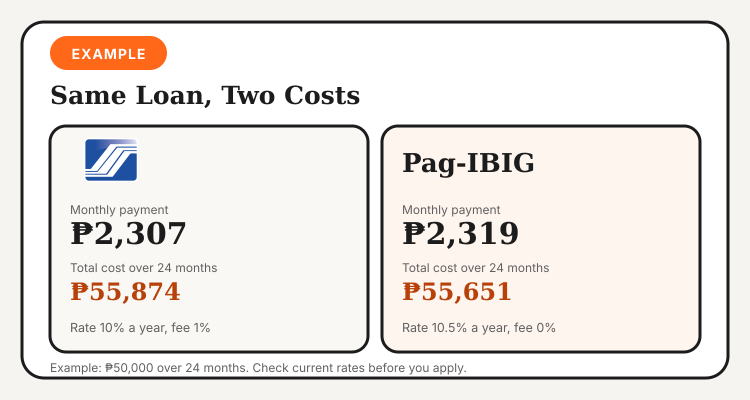
Take a ₱50,000 loan over 24 months. At 10 percent with a 1 percent fee, SSS comes to about ₱2,307 a month and about ₱55,874 in total. At 10.5 percent with no fee, Pag-IBIG comes to about ₱2,319 a month and about ₱55,651 in total. The fee closes the gap, and the lower rate does not always win. If the SSS rate is 8 percent, the same example costs about ₱54,773 in total, so SSS is cheaper by roughly ₱880.
What Changes the Answer
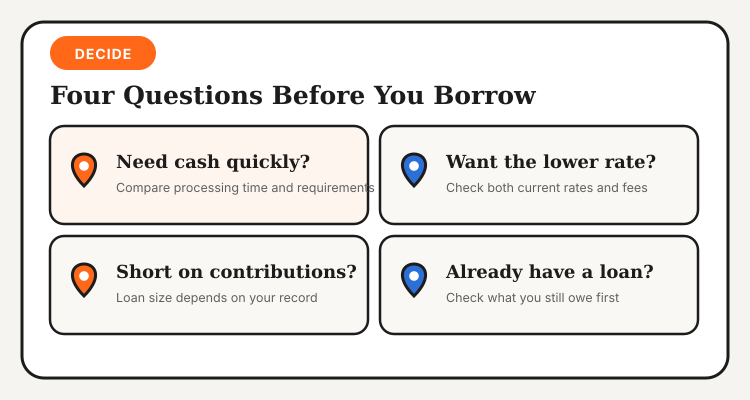
Half a percent difference changes your total only a little on a small loan, but it matters more on larger amounts and longer terms.
A service fee is deducted from the loan, so you receive less than you borrow. Compare the cash you receive, not just the rate.
Your contribution record or savings balance sets the limit, so the cheaper loan may not be available at the amount you need.
Before You Apply
Related guides: our SSS calamity loan guide, the GSIS vs SSS loan comparison and personal loan options. For any loan, try the loan amortization calculator.
Sources
Rates and fees reported by Moneymax and an ABS-CBN report on SSS rate reductions. Sources disagree on some figures, so confirm current rates, fees and limits with SSS and Pag-IBIG.