The Numbers, Straight From MariBank's T&C
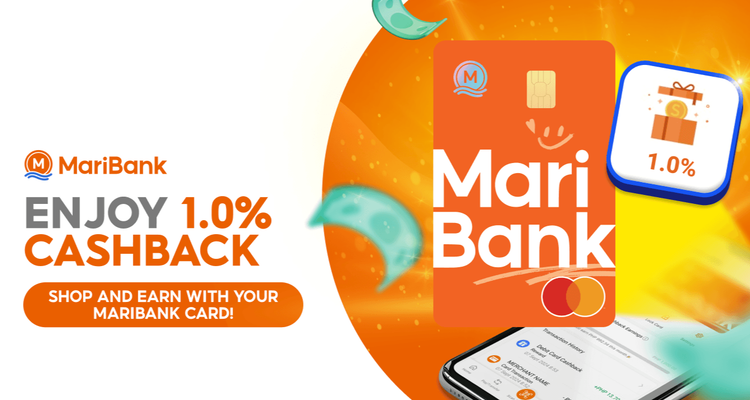
💳 Rate: 1.0% on eligible local transactions only
🧮 Monthly cap: ₱3,000, roughly ₱300,000 in eligible spend
🌏 Overseas: 0% cashback, plus a 2% Foreign Transaction Fee since March 4, 2025
🚫 Excluded: utilities, transportation, government fees, gambling, quasi-cash
Get ₱150 free when you sign up. Opening a MariBank account with referral code JA775362 credits an instant ₱150 to your new account once MariBank verifies it, on top of whatever cashback the MariCard earns afterward.
Sign up with code JA775362 →What Actually Qualifies for Cashback
MariBank's MariBank Debit Card Cashback Program pays 1.0% on two categories only: Local Point-of-Sale Transactions and Local Online Transactions. Both mean the merchant is Philippine-registered, whether you're tapping the card at a Puregold counter or checking out on a Shopee or Lazada listing sold by a local seller. The card issuer defines "local" strictly by merchant registration, not by where you happen to be standing when you pay.
That distinction trips people up more than the rate itself. A subscription billed in USD, an app store purchase routed through an overseas payment processor, or a hotel booking made directly with a foreign property can all get classified as an international transaction even though you paid for it from your couch in Quezon City. If cashback doesn't show up on a purchase that felt local, checking the merchant's registered country is usually the first thing to look at before assuming an error.
The Full Exclusion List
MariBank's Terms and Conditions name specific categories that never earn cashback, no matter how the transaction is classified otherwise:
- Quasi-cash: foreign currency purchases, casino chips, cryptocurrency, money orders, lottery tickets, traveller's cheques, and similar convertible-to-cash items
- Utilities (electricity, water, internet, phone bills)
- Transportation (this covers more than most people expect, check current app labeling before assuming a ride-hailing or toll top-up qualifies)
- Charities
- Government services
- Casino or gambling
- Fees and charges (including the card's own fees)
- Overseas Online Transactions and Overseas Point-of-Sale Transactions
- Any transaction MariBank later determines was unauthorized or fraudulent
That's a longer exclusion list than most Filipino cashback cards publish upfront, and it's worth reading once before assuming a category qualifies. MariBank also reserves the right to add categories to this list "with prior notice," so the eligible-transaction list isn't permanently fixed.
How the ₱3,000 Cashback Actually Gets Calculated
The formula is simple: Final Posted Amount of Purchase (in PHP) × 1.0% = Cashback Reward, computed per transaction, not on a monthly total. MariBank's own example: a ₱10,000 airline ticket earns ₱100 cashback. Buy that same ticket priced in USD, and the peso amount your card statement actually posts, after conversion, is what the 1.0% applies to, not the original dollar figure.
Add up enough ₱100-here, ₱50-there local transactions and the monthly cashback total caps out at ₱3,000. Working backward, that ceiling kicks in around ₱300,000 in eligible local spending in a single calendar month, well beyond what most individual cardholders route through a debit card, but not unusual for a small business owner or reseller who runs most of their peso transactions through one MariBank account.
Two more mechanics worth knowing: cashback is paid net of applicable withholding tax, so the amount that lands is the after-tax figure, and if a cashback-earning purchase is later refunded or disputed, the corresponding cashback is automatically deducted from your linked Savings Account once the reversal posts, not left as a standing credit.
Overseas Spending: What Changed in March 2025
This is the section most likely to catch existing cardholders off guard. Some marketing recaps of the MariCard, including earlier comparisons circulating online, describe "0% foreign exchange markup" and cashback on international purchases. MariBank's currently published Cashback Terms and Conditions say the opposite on both counts: Overseas Point-of-Sale and Overseas Online Transactions earn zero cashback, and starting March 4, 2025, Overseas Point-of-Sale Transactions carry a 2% Foreign Transaction Fee.
In practice: a MariCard swipe at a shop in Singapore or Japan today earns no cashback and costs an extra 2% in fees on top of the purchase price. That's a meaningfully different card than the "cashback everywhere, no FX fee" version some earlier writeups describe. If you're choosing a card specifically for overseas travel spending, verify the current fee schedule in the MariBank app before your trip rather than relying on older marketing screenshots, cashback program terms are explicitly subject to change with notice, and this is one case where they already have.
Fees and Getting the Card
The MariBank Savings Account itself has no maintaining balance requirement and no monthly account fee, standard for Philippine digital banks at this point. The MariCard comes in two forms: a free virtual card that works immediately for online purchases and Google Pay, and a physical card normally priced at ₱49, though MariBank runs periodic promos that waive the fee once a cardholder completes an initial in-store transaction.
Both card forms carry the same 1.0% cashback terms, there's no cashback advantage to paying for the physical card over using the virtual one, only the practical difference of being able to tap or swipe in person versus checking out online.
Google Pay and Everyday Use
Both the virtual and physical MariCard can be added to Google Wallet for tap-to-pay at any contactless-enabled terminal, which is how most Filipino cardholders actually use the virtual card day to day, no need to wait for the ₱49 physical card to arrive by mail before tapping to pay at 7-Eleven or a jeepney-adjacent sari-sari store with a card reader. Real-time transaction tracking in the MariBank app shows cashback crediting as it posts, rather than bundling it into a once-a-month statement the way older bank cashback programs typically work.
Common Cardholder Questions the T&C Doesn't Spell Out Plainly
A few patterns come up often enough in how people describe their MariCard experience that they're worth flagging directly, even without a single citable source to point to for each one. The most common confusion is Shopee and Lazada purchases: since both platforms host a mix of local and cross-border sellers, cashback eligibility on the same app can vary listing to listing depending on where the specific seller is registered, not the platform as a whole.
The second is subscription billing. Streaming and software subscriptions that bill in USD or route through an overseas payment gateway commonly post as international transactions even when the service is used entirely within the Philippines, which means no cashback and, since March 2025, a potential FX fee on top. Checking whether a recurring subscription is classified as local or international before assuming it contributes toward the ₱3,000 cap avoids a surprise at the end of the month.
We looked for specific public reviews or discussion threads about the MariCard cashback program to include here and didn't find a verifiable one worth quoting directly, MariBank's Philippine rebrand from SeaBank happened relatively recently, in September 2025, so English-language community discussion specifically under the MariBank name is still thinner than for longer-running apps like GCash or Maya. If that changes, this section is the one we'll update first.
Is the MariCard Cashback Worth It?
For everyday local spending, groceries, GCash-linked purchases, Shopee listings from local sellers, dining out, 1.0% with no minimum spend and no annual fee is a straightforward, low-effort return that beats most Philippine debit cards, which typically offer no cashback at all. The ₱3,000 monthly cap is high enough that the average household won't hit it, and the exclusion list mostly rules out the kind of spending (utilities, government fees) that wasn't going to feel rewarding anyway.
Where it falls short is anyone expecting the card to double as a travel card. The 0% cashback and 2% FX fee on overseas spending make MariCard a worse choice abroad than it's sometimes described as being. For a broader look at how MariBank stacks up against GoTyme and Maya on interest rates, cashback, and overall fit, see our MariBank vs GoTyme vs Maya comparison, and for the full account-opening walkthrough, our MariBank and MariCard review covers the GCash integration in more depth.
Open a MariBank account and start earning
Sign up with referral code JA775362 for an instant ₱150 credit, then start earning 1.0% cashback on eligible local purchases.
Sign Up with Code JA775362 →