Build Quality and Design
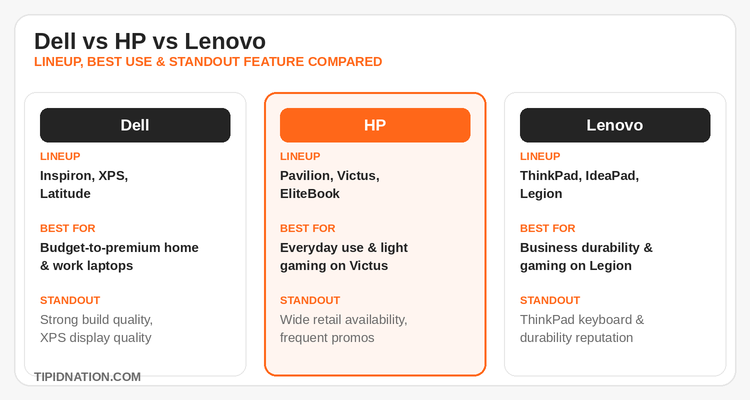
Dell leans into premium materials on its XPS line, with aluminum chassis and thin bezels that hold up well against daily bag-carrying. The Inspiron series below it uses more plastic but keeps the same hinge durability Dell is known for. Lenovo's ThinkPad line is the closest thing to a tank in this category, carbon-fiber reinforced and MIL-SPEC tested, which is why it's the default pick for IT departments and frequent travelers. HP's Pavilion and Envy lines sit in between, solid enough for daily use with a design that leans more consumer-friendly than corporate.
If you're the type who tosses a laptop into a backpack and commutes daily on jeepneys or the MRT, Lenovo's hinge and chassis durability gives it a slight edge. If design and screen quality matter more than raw toughness, Dell's XPS display panels are consistently rated among the best in this price bracket.
Battery Life and Everyday Use
Lenovo's ThinkPad and IdeaPad lines routinely post the longest real-world battery life in this trio, often stretching past 10 hours on lighter workloads like browsing and document editing. Dell's XPS line trades some battery life for a brighter, higher-resolution screen, landing closer to 7 to 8 hours under similar conditions. HP's Pavilion sits in the middle, generally strong enough for a full workday of typing and video calls without needing a midday charge.
For remote workers who move between coworking spaces, cafes, and home without consistent outlet access, Lenovo's battery advantage is the more practical everyday win. For anyone doing color-sensitive work like photo editing, Dell's screen quality pays off more than the extra hour or two of battery.
Best Use Case by Brand
Dell for creative work: XPS models with higher-resolution panels suit photo editing, video review, and design work where screen accuracy matters. HP for everyday value and printing needs: Pavilion and OfficeJet bundles make sense for home offices that also need reliable printing. Lenovo for students and mobile professionals: ThinkPad and IdeaPad models balance battery life, keyboard comfort, and durability for people who type all day and move around a lot.
Gamers looking at any of these three should temper expectations. Dell's G-series and select Lenovo Legion units cover entry-level gaming, but neither brand builds gaming as its primary focus the way ASUS ROG laptops or Acer Predator do. If gaming performance is the priority, it's worth comparing those dedicated gaming lines before settling on Dell, HP, or Lenovo.
Price and Warranty in the Philippines
All three brands sell through official Shopee flagship stores in the Philippines, with pricing that undercuts most physical retail by a noticeable margin during sale events. Entry-level HP Pavilion and Lenovo IdeaPad units start in a similar bracket, while Dell's Inspiron line tends to price slightly higher for comparable specs due to its build materials.
Warranty coverage runs 1 to 2 years across all three when purchased through the official store or an authorized retailer like Digital Walker, Silicon Valley, or PC Express. Buying from an unofficial reseller, even at a lower listed price, risks losing that warranty coverage entirely if something goes wrong.
Which Brand Should You Actually Buy
There's no universal winner here, only a better fit depending on what you actually do with a laptop. Choose Lenovo Philippines laptop deals if battery life and typing comfort matter most for school or remote work. Choose Dell Philippines laptop deals if screen quality and design matter for creative or presentation-heavy work. Choose HP Philippines laptop deals if you want dependable everyday performance, especially paired with a printer for a home office setup.
Frequently Asked Questions
Compare live Dell, HP, and Lenovo deals on their official Shopee stores, updated regularly by TipidNation.
View Dell Deals → View HP Deals → View Lenovo Deals →