Maynilad West Zone vs Manila Water East Zone: How Billing Works
Metro Manila's water supply is split between two concessionaires. Maynilad serves the West Zone, covering Manila, Quezon City's western half, Caloocan, Pasay, Parañaque, Las Piñas, Muntinlupa, and most of Cavite. Manila Water serves the East Zone, covering Makati, Pasig, Mandaluyong, Marikina, most of Quezon City, Taguig, and parts of Rizal. Both operate under Metropolitan Waterworks and Sewerage System (MWSS) oversight and both use the same basic pricing structure: a tiered rate based on how many cubic meters you consume in a billing month.
The two companies are not identical on price, and rates get adjusted periodically, so the exact peso figure on your bill will differ from a neighbor on the other concessionaire even at the same usage level. What matters more for saving money is understanding the shape of the tariff, not memorizing a specific rate that changes over time.
| Factor | Maynilad (West Zone) | Manila Water (East Zone) |
|---|---|---|
| Billing unit | Per cubic meter (cu.m.), tiered blocks | Per cubic meter (cu.m.), tiered blocks |
| Coverage area | Manila, Caloocan, Pasay, Parañaque, Las Piñas, Muntinlupa, Cavite | Makati, Pasig, Mandaluyong, Marikina, Taguig, parts of Rizal |
| Rate reviews | Periodic rate rebasing under MWSS | Periodic rate rebasing under MWSS |
| Digital payment | GCash, Maya, bank apps, business centers | GCash, Maya, bank apps, business centers |
| Leak reporting | Hotline and mobile app reporting | Hotline and mobile app reporting |
Understand Your Tiered Rate Before You Panic
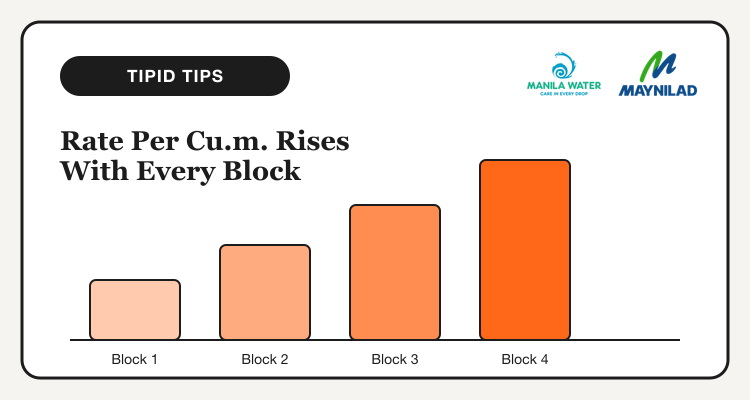
The single most useful thing to understand about your water bill is that it is not a flat rate. Both Maynilad and Manila Water charge more per cubic meter as your consumption climbs into higher blocks. That means the last five or ten cubic meters of a heavy-usage month are billed at a noticeably higher rate than the first ten. A household that stays just under a tier threshold can end up paying meaningfully less than one that crosses it by only a few cubic meters.
This is why two households with similar-looking usage sometimes see very different bills. It also means the most effective savings often come from shaving off the last few cubic meters of a heavy month, not from an across-the-board cut. Check the consumption history section printed on your bill or shown in the provider's app. If you're consistently landing just above a tier boundary, that's the number worth targeting first.
Find and Fix Leaks First
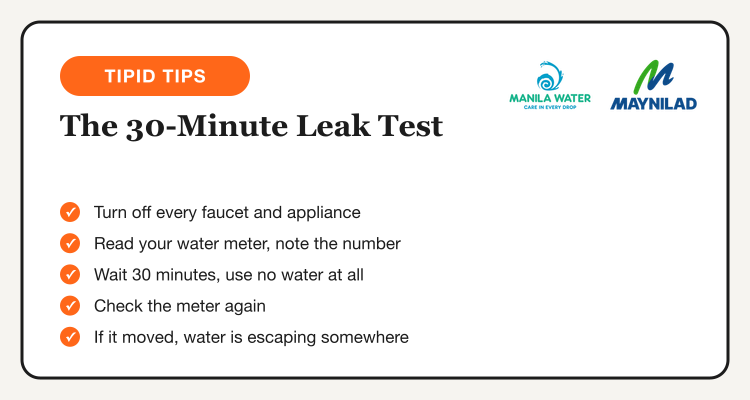
Before changing any habits, rule out a leak. This is the step most households skip, and it's often where the biggest peso savings hide. Shut off every faucet, washing machine, and appliance that uses water, then note the reading on your water meter. Wait 30 minutes without using any water at all, then check the meter again. If the number moved, water is escaping somewhere between the meter and your fixtures, or inside a fixture itself.
A running or leaking toilet is the most common culprit. A flapper valve that doesn't seal fully lets water trickle from the tank into the bowl continuously, often without a sound you'd notice. Over a full billing cycle, that steady trickle can push a household from one tariff block into the next, which is a bigger cost than the raw liters suggest because of the rising rate. A replacement flapper valve costs a small fraction of what a month of leaked water costs at the higher block rate. Check under-sink pipe joints and outdoor faucets too. A slow drip that seems minor day to day adds up fast across 30 days.
Daily Habits That Add Up
Once you've confirmed there's no leak, the remaining savings come from a handful of repeatable habits rather than dramatic lifestyle changes.
- Fix the drip, not just the leak. Even a faucet that isn't visibly leaking but drips slowly after use should get a new washer.
- Use a timer or bucket for the tabo. Filling a bucket for washing dishes or clothes uses noticeably less water than letting a faucet run continuously.
- Run washing machines and dishwashers full. A half-full load still uses close to a full cycle of water.
- Collect rinse water for plants or cleaning. Water used to rinse vegetables or the first cold blast before a shower warms up doesn't need to go down the drain.
- Set a household usage target. Check your consumption history and agree on a target number of cubic meters that keeps you under your current tier, then track it against your bill each month.
None of these require new appliances or major renovation. They're the kind of small, repeatable changes that show up as a lower number on your bill within one or two cycles, and they compound the same way smart budgeting habits for Filipino households do across other recurring bills.
Your 5-Step Guide to a Lower Water Bill
Pull your last 3 to 6 months of billed cubic meters
Check your printed bill history or the Maynilad or Manila Water mobile app to see your actual usage pattern, not just the peso total.
Run the 30-minute meter test
Turn off all fixtures, read the meter, wait 30 minutes with nothing running, then read it again to rule out a hidden leak.
Fix the flapper valve and check faucet washers
These two fixes resolve the majority of household water leaks and cost far less than a month of leaked usage at the higher tariff block.
Set a household cubic meter target
Pick a number just under your current tier boundary and track it weekly so you can adjust before the billing cycle closes.
Pay on time through a digital channel
Settle your bill through GCash Bills or a similar app before the due date to avoid reconnection fees and late charges stacking on top of usage costs.
If you're already routing other recurring bills through GCash, it's worth reading how the app's other features work in the guide to cutting your Meralco electricity bill, since the same account and the same GCash bills payment channel covers both. Households working toward a specific savings goal, like a plumber's visit or a meter upgrade, can also set that money aside ahead of time using the approach in our guide to building a sinking fund.
Frequently Asked Questions
Route your Maynilad, Manila Water, and other recurring bills through GCash Bills, plus find active GCash promo codes and vouchers on TipidNation.
View GCash Deals →