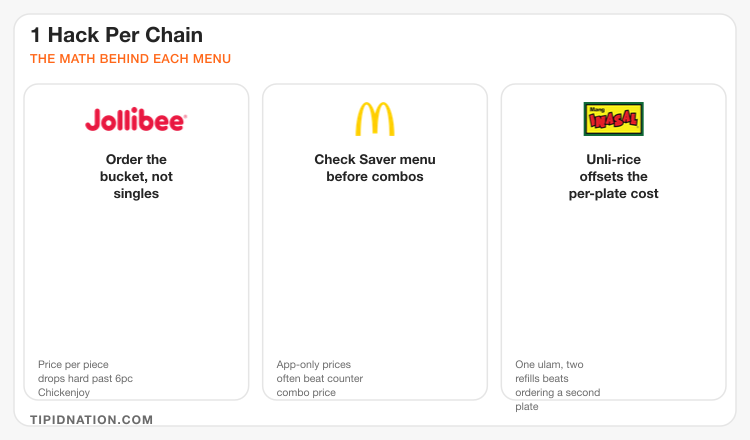
Jollibee: Order the Bucket, Not the Singles
Chickenjoy priced by the piece looks reasonable until you compare it against a bucket. The per-piece cost drops hard once an order crosses into the 6pc range, so a group of three or four splitting a bucket almost always beats everyone ordering their own 1pc or 2pc meal. Jolly Spaghetti and Burger Steak also tend to price better as part of a family or sharing bundle than as standalone à la carte items.
The Jollibee app surfaces bundle and group-meal promos that don't always show on the in-store menu board, so it's worth a quick check before defaulting to counter pricing, especially for a group order.
McDo: Check the Saver Menu Before the Combo
McDo's Savers menu runs items priced well below the equivalent combo meal, and app-exclusive deals frequently beat whatever's posted at the drive-thru board. Before defaulting to a combo out of habit, pulling up the app and comparing the Saver price against the combo price for the same core item (burger, fries, drink) often reveals a cheaper path to the same meal.
Breakfast menu cutoff timing is another one worth knowing. Ordering right before the breakfast-to-regular-menu switch sometimes means catching value breakfast pricing that disappears a few minutes later, useful if the exact cutoff time at a specific branch is known.
Mang Inasal: Unli-Rice Changes the Math
Mang Inasal's unlimited rice is the single biggest lever on the bill. One ulam (Chicken Inasal, Pork BBQ, or similar) with two rice refills typically costs less per person than ordering a second full plate just to feel satisfied. This only works in your favor if you'd actually use the refills, if one serving is already enough, a smaller plate or combo without the unli-rice add-on is the cheaper choice.
Halo-halo and other dessert add-ons are usually better value bought separately after the main meal rather than as part of a bundled combo, since bundled dessert pricing doesn't always undercut buying each item on its own.
Seasonal Timing: When to Order for the Best Value
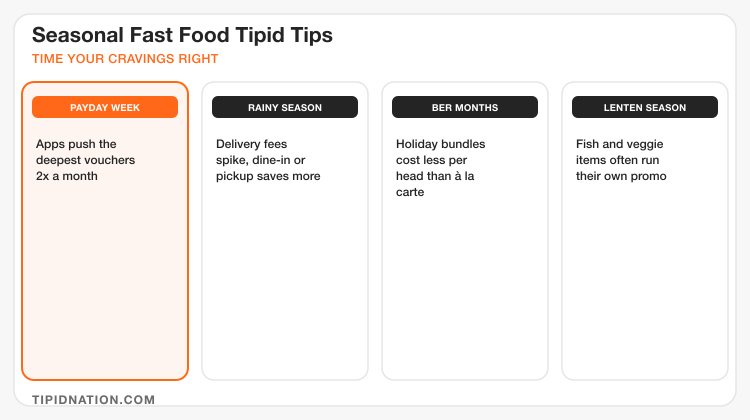
Fast food promos aren't random, they tend to cluster around predictable stretches of the year. Payday week (the 15th and the end of the month) is when apps across all three chains tend to push their deepest vouchers, since that's when spending naturally spikes. During rainy season, delivery fees and delivery-app markups climb along with demand, so dine-in or pickup saves more than usual on wet days. The ber months bring holiday bundle pricing that typically costs less per head than ordering the same items à la carte. And during Lenten season, fish and vegetable-based items often get their own standalone promo, worth checking even outside a typical craving.
General Rules That Work Across All Three
A few habits apply no matter which chain is on the menu tonight. Group orders beat solo orders, splitting a bucket, family meal, or sharing platter almost always costs less per person than everyone ordering individually. Pickup beats delivery on pure cost, once a delivery fee and any delivery-app markup on menu prices are factored in, walking in or driving through saves more than having it delivered, even if delivery wins on convenience. App prices aren't always store prices, the same item can be priced differently between the physical counter, the brand's own app, and a third-party delivery app, so it's worth a quick compare before ordering out of habit.
Paying through GCash or Maya when ordering via foodpanda or GrabFood can also unlock wallet-side cashback or discount promos stacked on top of whatever the restaurant or delivery app is already offering, worth checking the active promo on each wallet before checkout.
What Pinoy Budget Communities Online Actually Share
Browse enough Filipino budgeting threads on Reddit, tipid-focused Facebook groups, and food blogs, and the same handful of habits keep coming up. A common thread: checking the app before walking in, since several posters note catching a deal at checkout they wouldn't have known about from the physical menu alone. Another recurring tip involves timing orders around payday or specific promo days rather than ordering purely on craving, with several commenters pointing out that the same combo meal can cost noticeably less just by waiting a day or two for an active voucher window. Group-splitting bucket or bundle meals instead of ordering individually also comes up often as the most consistent saver across all three chains, echoing the per-piece math above.
None of these are secret codes or hidden menu items, just the same pattern repeated across different communities: check the app, time the order, and split with a group when possible.
5-Step Routine for Cheaper Fast Food Runs
Open the app before deciding what to order
Compare the app-exclusive or Saver pricing against the counter combo for the same core items.
Calculate per-piece or per-person cost
Buckets, family meals, and unli-rice setups usually beat solo orders once split across a group.
Pick pickup over delivery when possible
Delivery fees and app markups add up fast. Save delivery for when convenience genuinely matters more than cost.
Check GCash or Maya for stacked promos
Wallet-side cashback or discounts can stack on top of the restaurant or delivery app's own deal.
Time non-urgent cravings around payday or ber months
If it can wait a day or two, waiting for a voucher window usually beats ordering on impulse.
Frequently Asked Questions
Practical ways to save on everyday spending, updated regularly on TipidNation.
Browse the Blog →