
El Niño Is Coming, Here's What That Actually Means
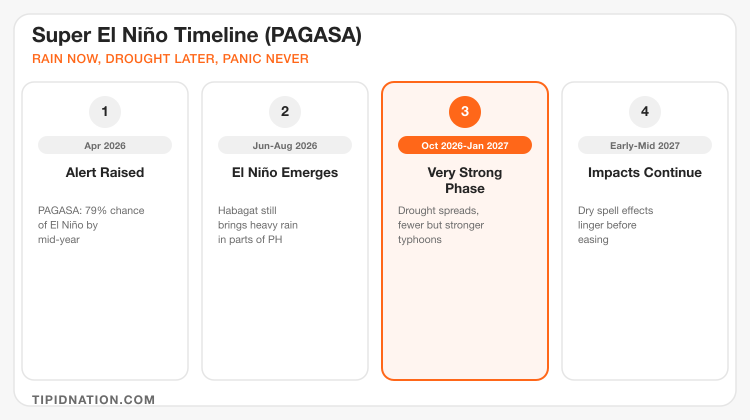
El Niño is a warming of ocean temperatures in the Pacific, a climate pattern that shifts weather patterns worldwide. When the warming runs especially strong, it's called a Super El Niño. In April 2026, PAGASA raised an El Niño Alert, warning of a 79% chance the phenomenon would develop by mid-year and persist into early 2027. Since then, PAGASA has updated that outlook: a moderate to strong El Niño is already present in the tropical Pacific, and current models point to a very strong El Niño from around October 2026 through January 2027, with impacts likely stretching into the first half of 2027.
This matters beyond just hotter afternoons. Extreme heat and drier conditions usually mean higher electricity bills from more aircon and fan use, more pressure on water supply, drier farms with lower crop output, and eventually higher prices for everyday goods. None of this is a reason to panic. It's a reason to make small adjustments now, while there's still runway to do it calmly.
Rain Now, Drought Later: Why the Weather Feels Confusing
If it still feels rainy where you are, that's not a contradiction. El Niño overlaps with the southwest monsoon season (Habagat) in the Philippines, which explains why heavy rains and flooding can continue in some areas even as ocean temperatures climb. For now, expect heavier rains and localized flooding to persist in parts of the country. But as the year winds down, the rains weaken and give way to a longer drought, with PAGASA already flagging several provinces across Luzon and the Visayas for drought conditions in October and November 2026, and more areas expected to follow through early 2027.
El Niño also tends to reduce the overall number of storms, PAGASA currently estimates around 3 to 5 tropical cyclones entering or forming in the Philippine area of responsibility from October 2026 to March 2027. Fewer storms sounds like good news, but warmer seas act as extra fuel, so the storms that do form have a higher chance of intensifying into super typhoons. Fewer storms doesn't mean lower risk, it just shifts where the risk sits.
Electricity: Where the Biggest Savings Are
As heat builds, electricity use usually spikes right along with it, and that's where preparing early pays off fastest. A few habits make a real dent before your bill does:
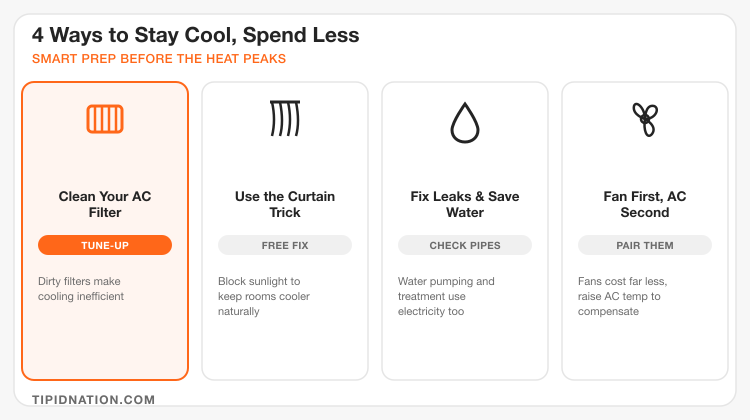
- Clean your AC filter. Dirty filters make cooling inefficient, a simple tune-up before the heat peaks saves energy all season.
- Use the curtain trick. Block sunlight with curtains or blinds during the hottest hours to keep rooms cooler naturally, no extra electricity needed.
- Save water to save power. Water pumping and treatment consume electricity too, so conserving water at home also eases pressure on the grid during a drought.
- Use fans wisely. Fans use far less energy than aircon. Pairing a fan with a slightly higher aircon temperature setting keeps a room comfortable at a lower cost than aircon alone.
- Unplug idle devices. Chargers, TVs, and routers left plugged in still draw standby power, a power strip with a switch makes it easy to cut this off at once.
- Switch to LED bulbs. LED uses a fraction of the wattage of incandescent or CFL bulbs and lasts longer, a one-time swap that keeps paying off.
- Shift heavy appliance use off-peak. Run the washing machine or iron early morning or late evening instead of peak afternoon heat, when the aircon is also working hardest.
For a deeper breakdown of Meralco billing, inverter versus non-inverter appliances, and more habits that cut your monthly bill, our electricity savings guide walks through the full math.
Water: Fix Leaks Before the Dry Season Makes Them Worse
A drought puts real pressure on water supply, and a household leak that's easy to ignore during the rainy season becomes a bigger waste once water becomes scarcer. Walk through your home and check faucets, toilets, and exposed pipes for drips or slow leaks now, while it's a quick fix rather than a bigger repair later. Keeping a reasonable supply of drinking water at home is also worth doing early, not as hoarding, just enough to cover a few days if supply gets interrupted during peak drought months.
If your water bill already runs higher than it should, our water bill savings guide covers how the tiered rate system works for Maynilad and Manila Water, and how to catch a hidden leak before it shows up as a spike on your bill.
A few more habits worth building now, while the rains are still around. Keep a pail under the shower while waiting for hot water instead of letting it run down the drain, that water is fine for mopping or flushing. If your roof setup allows it, a simple rain barrel catches water during Habagat downpours for later use on plants or cleaning, free water while it still falls regularly. And check your water meter at night before bed and again in the morning. If it moved and nothing was running, that's a leak worth chasing down.
Groceries: Prepare Early Without Overbuying
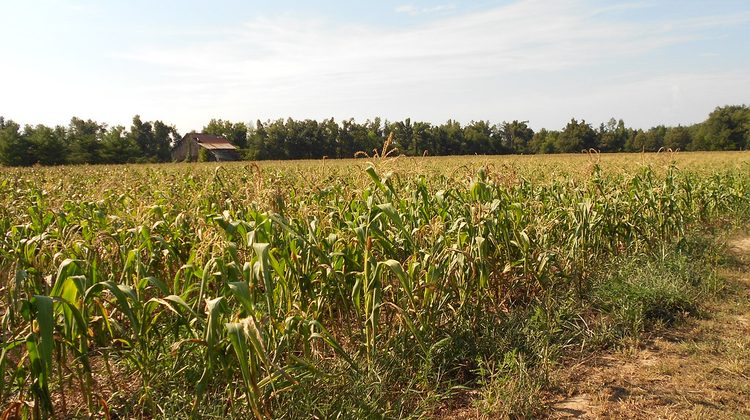
Drier farms usually mean lower crop yields, and lower supply tends to push prices up over time, especially for rice, vegetables, and other weather-sensitive produce. This is the part where the instinct to stock up kicks in, and it's worth resisting. Panic buying drives prices up faster for everyone, including you. A more practical approach: keep a small, sensible buffer of pantry staples you already use regularly, and pay attention to price trends on your usual grocery run instead of waiting to notice a spike all at once.
If you're deciding between bulk buying and retail for staples that keep well, our bulk buying vs retail guide breaks down the actual peso-per-unit math, and when a bulk haul is worth it versus when it just ties up cash for no real savings. For routine grocery runs, the grocery savings guide covers where to buy each category for the best price, palengke, supermarket, or online.
A couple more habits that help before prices move. Buy what's in season, seasonal produce usually costs less because supply is still normal, and shifts as weather-sensitive crops get harder to grow. Rice, canned goods, and other long-shelf-life staples are also worth checking for price tracking apps or grocery price alerts, so you notice a creeping increase instead of being surprised by it. And if freezer space allows, cooking and freezing meals in batches when ingredients are still priced normally stretches your budget further than buying fresh every single week once prices climb.
Travel: Booking Smart Around a Hotter, Drier Stretch
El Niño's drier conditions tend to mean clearer skies and fewer weather disruptions for travel within the Philippines in the months ahead, but also higher daytime heat at many destinations, something worth factoring into when and where you book. Earlier booking windows typically still carry the best fares before demand ramps up closer to peak dry season, so locking in flights and accommodations ahead of time protects your budget either way.
It's also worth budgeting a little differently for a hotter trip: more bottled water, sun protection, and possibly adjusted activity times to avoid the worst midday heat. None of this changes the trip itself, it just avoids last-minute costs that pop up when the heat catches you unprepared. Our best time to book flights guide covers the booking windows that usually land the lowest fares, El Niño or not.
Shopping: Budget a Little Extra for Utilities and Groceries
The simplest shopping adjustment isn't about buying more, it's about leaving a little extra room in your monthly budget for utility bills and groceries that may run higher over the coming months. If you already track your spending by category, bump your electricity, water, and grocery allocations up slightly now rather than scrambling when the actual bill lands higher than expected. This is also a good stretch to prioritize energy-efficient purchases if you're already planning to replace an old aircon unit or appliance, since the savings compound right as electricity demand peaks.
If a fan, AC unit, or inverter appliance upgrade is already on your list, buying ahead of peak summer demand usually beats waiting. Prices on cooling appliances tend to climb once everyone is shopping for the same thing in the hottest months, so an earlier purchase during a regular sale window often costs less than a rushed one later.
Health and Household: Small Preparations That Matter
Preparing for El Niño isn't only about bills, it's also about staying comfortable and safe through hotter, drier months. Keep a basic supply of oral rehydration salts or electrolyte drinks at home, heat exposure drains the body faster than most people expect, especially for kids and elderly family members. Rearrange daily routines where possible, errands and outdoor chores in the early morning or late afternoon instead of peak midday heat, cuts both heat risk and the temptation to blast the aircon the moment you get home.
It's also worth building or topping up a small emergency fund buffer if you don't already have one. A few weeks' worth of essential expenses set aside gives you room to absorb a higher-than-usual bill without it throwing off the rest of your budget. This doesn't need to happen all at once, even a small automatic transfer each payday adds up well before the months where it matters most.
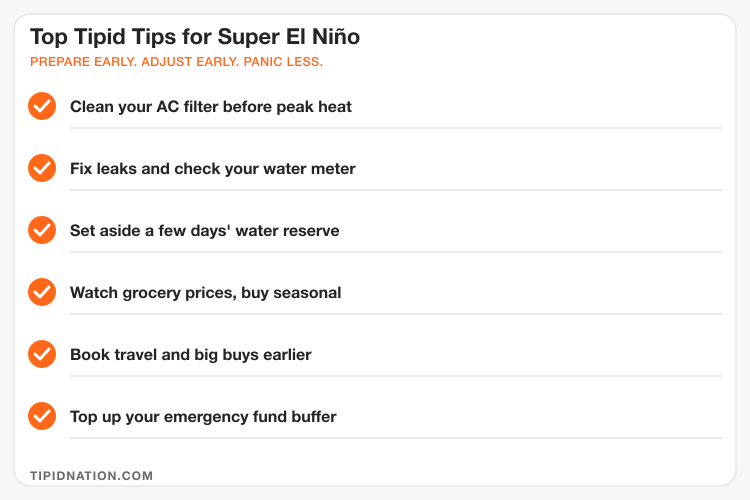
5-Step Prep Checklist for the Months Ahead
Get your AC serviced before peak heat
Clean filters now instead of waiting until the unit is already struggling to keep up during the hottest months.
Walk your home for leaks
Check faucets, toilets, and pipes. A small drip wastes more than it looks like once water supply tightens.
Set aside a reasonable water reserve
Enough for a few days of normal use, not a stockpile, just a buffer in case supply gets interrupted.
Adjust your monthly budget slightly
Leave extra room for utilities and groceries so a higher bill doesn't throw off your whole month.
Book travel and big purchases earlier
Earlier booking windows and planned purchases usually beat waiting until prices move with demand.
Frequently Asked Questions
Practical ways to save on bills, groceries, and everyday spending, updated regularly on TipidNation.
Browse the Blog →