Resellers turn to Alibaba for one reason: factory-direct pricing at volumes that make a per-unit margin actually work. Shopee, Lazada, and Taobao sell at retail quantities, which is fine for testing an idea but hard to scale once demand picks up. Alibaba connects you straight to manufacturers and trading companies willing to sell in bulk, at a fraction of what you'd pay buying the same stock one piece at a time. The tradeoff is that sourcing this way carries more steps, and more ways to lose money, than a one-click Shopee checkout: you're negotiating with a supplier you've never met, paying before anything ships, and arranging international freight instead of waiting for a courier. None of those steps are difficult on their own, they just have to happen in the right order. The process below is the version experienced resellers actually follow, start to finish.
What to Prepare Before Your First Order
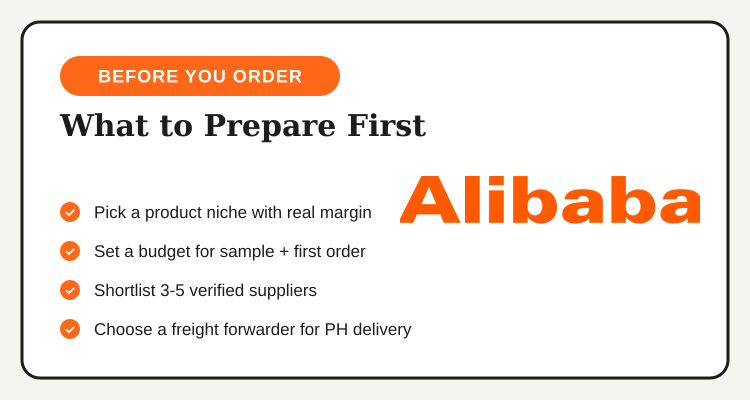
Before messaging a single supplier, lock down three things: the product niche you're testing, a rough budget for a sample plus a small first order, and a shipping plan for getting goods into the Philippines once they're ready. Skipping this step is the most common reason first orders go sideways, resellers get excited about a product photo, pay a deposit, and only then start asking how it's getting to Manila. Decide your numbers first, then shop.
Your 5-Step Alibaba Sourcing Guide
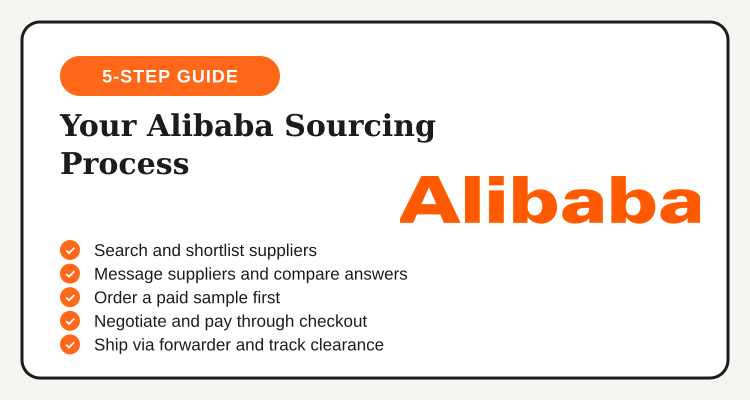
1. Search and shortlist suppliers. Filter listings for the Verified Supplier and Trade Assurance badges, and open three to five suppliers for the same product so you have real pricing and lead-time comparisons instead of anchoring on the first listing you find.
2. Message suppliers directly. Ask each one about their minimum order quantity, lead time, customization options, and whether Trade Assurance applies to the listing. How quickly and specifically a supplier answers tells you almost as much as the answer itself.
3. Order a paid sample. Never commit to a bulk run sight unseen. A sample costs a fraction of a full order and lets you check material quality, sizing, and finish against what the listing photos promised.
4. Negotiate and place the order through checkout. Lock in price, quantity, and shipping terms in chat, then pay through Alibaba's own secured checkout rather than an outside transfer, so the order record and any protection stay intact.
5. Arrange shipping and track clearance. Book through a freight forwarder that handles Philippine customs, or ask your supplier for a forwarder recommendation, then track the shipment through to delivery at your address or a consolidation warehouse.
How to Vet a Supplier Before You Pay
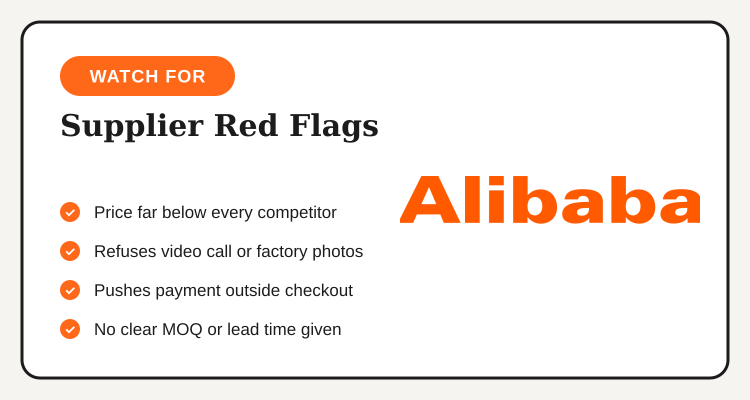
Supplier quality is the single biggest variable in whether a sourcing run turns a profit or wipes out your capital. A Verified Supplier badge and a few years of active history are a reasonable starting filter, but push further: ask for a short video call or live factory photos, and see how a supplier responds to specific questions about materials or production capacity rather than generic reassurances. A supplier with nothing to hide usually has no issue with either request. Response speed matters too, a supplier who takes three days to answer a simple MOQ question during the sales stage is unlikely to get faster once you've already paid.
It also helps to compare at least two or three suppliers for the exact same product rather than settling on whoever responded first. Price differences of 10 to 20 percent between suppliers offering the same spec aren't unusual, and that gap often comes down to order volume commitments, raw material sourcing, or simply how much margin a trading company is building in versus dealing with the factory directly.
Trade Assurance, Samples, and MOQ: The Three Things That Protect Your Capital
These three pieces work together rather than replacing each other. Trade Assurance protects the payment itself, it holds your money until the supplier ships what was agreed and gives you a dispute path if they don't. A paid sample catches a quality problem before it ever becomes a dispute, since by the time goods arrive in bulk, a dispute is a slower and messier fix than simply not placing the full order in the first place. And negotiating MOQ down for a first order, most suppliers will flex on their stated minimum for a new buyer willing to pay full price, keeps your exposure small while you confirm the product actually sells. For a full breakdown of exactly what Trade Assurance covers and where its limits sit, this explainer walks through the checklist in more detail.
Getting Your Order Into the Philippines
Once an order ships, a freight forwarder is what actually gets it from a Chinese port to your door, handling consolidation, customs declaration, and duties along the way. Sea freight is the cheaper option and typically takes three to six weeks depending on the port and how quickly customs clears the shipment, while air freight lands faster, often one to two weeks, at a noticeably higher cost per kilo. Many first-time resellers use a consolidation warehouse that combines several supplier shipments into a single container, which lowers the per-kilo freight cost if you're testing more than one product at once. Build that lead time into when you plan to have stock ready to sell, not just when you place the order.
| Platform | Order Quantity | Best For a Reseller |
|---|---|---|
| Alibaba | Set by supplier MOQ, usually bulk | Scaling a validated product at the lowest per-unit cost |
| Taobao | Single item, no MOQ | Testing a product idea before committing to bulk |
| Local resale (Shopee, Lazada) | Already-landed stock | Reselling inventory already in the Philippines |
The three aren't competitors so much as different stages of the same business. A reseller might validate a product on Taobao at single-item quantity, confirm it sells, then move to Alibaba once volume makes the lower per-unit wholesale price worth the larger upfront commitment. Running both in parallel for different products is common once a reseller has more than one line going.
Bottom Line
Sourcing from Alibaba as a Filipino reseller isn't complicated once you've done it once, it's picking a product, vetting the supplier properly, paying through checkout instead of around it, sampling before you scale, and planning for the shipping lead time from day one. Get those five things right and the margin an overseas supplier offers over local retail stock is exactly what makes the extra steps worth it. For current sitewide discounts and new buyer vouchers to apply to your first order, the Alibaba Philippines deals page tracks what's active this month.
Ready to place your first sourcing order?
See current sitewide discounts and new buyer vouchers on the Alibaba Philippines deals page.
See Alibaba Deals →