Small business owners and resellers sourcing on Alibaba face a specific kind of risk that Shopee or Lazada buyers never really deal with: paying a supplier they've never met, in a country they can't easily chase down if something goes wrong. Alibaba Trade Assurance exists specifically to close that gap. It isn't a marketing badge, it's an actual payment structure that changes who holds the money and when it gets released, and understanding exactly how it works is the difference between using it as real protection and just assuming a logo on a listing means you're covered.
What Trade Assurance Actually Covers
Trade Assurance is a free order protection service built into checkout on listings and suppliers that display the badge. When you complete payment through Alibaba's secured checkout instead of an outside transfer, that payment sits with Alibaba rather than going straight into the supplier's account. Two things are covered under that arrangement: whether the supplier ships within the date both sides agreed to, and whether what actually ships matches the product specifications, quantity, and quality confirmed in the order agreement. If either one fails, you have grounds to open a dispute and request a refund through the platform instead of negotiating directly with a supplier who has already been paid in full.
It's worth separating two badges that often show up together but mean different things. Gold Supplier status is a paid membership tier that signals how long a company has maintained an active, verified account on Alibaba, it says something about business longevity, not about whether a specific order is protected. Trade Assurance is the payment protection itself, tied to the individual order, not the supplier's membership tier. A supplier can hold Gold Supplier status without offering Trade Assurance on every listing, so check for the actual Trade Assurance badge and the protected amount at checkout, not just the Gold Supplier badge sitting on the company profile.
How a Trade Assurance Order Actually Works
The mechanics follow the order you'd expect from a normal B2B negotiation, with one key difference at the payment step. You find a supplier showing the Trade Assurance badge, then negotiate price, minimum order quantity, product specs, and a shipping date the same way you would with any supplier. Where it changes is at checkout: instead of wiring money to a personal or company bank account outside the platform, you pay through Alibaba's own secured payment flow, and that payment amount and shipping date get locked into the order record Alibaba uses if a dispute comes up later.
From there, the supplier ships within the confirmed window. Once goods arrive, or once the shipping date passes without a shipment, you have a defined coverage period to inspect the order and, if something's wrong, open a dispute through Alibaba's resolution center with photos and the original order agreement as evidence. Alibaba's team reviews both sides and can help negotiate a refund or replacement if the claim holds up. None of that recourse exists if payment happened outside the platform in the first place.
| Covered by Trade Assurance | Not Covered |
|---|---|
| Late or missing shipment past the agreed date | Payments sent outside Alibaba's own checkout |
| Product doesn't match the agreed specs or sample | Buyer's remorse on an accurately described item |
| Refund processed through the original payment method | Issues that begin after a freight forwarder takes over |
| Dispute reviewed by Alibaba if buyer and supplier can't agree | Disputes filed after the coverage window closes |
Why This Matters More If You're Sourcing in Bulk From the Philippines
A Filipino reseller placing a first bulk order faces a version of this risk a casual Shopee shopper doesn't: there's no local seller rating built from thousands of Philippine transactions to lean on, no easy small-claims path if a supplier overseas ships the wrong product, and the amount at stake is usually working capital for the business, not a ₱500 impulse buy. Trade Assurance doesn't remove supplier risk entirely, sourcing still depends on picking a supplier whose product and communication you trust, but it changes what happens if that judgment turns out wrong. Instead of absorbing the loss and hoping the next order goes better, there's a documented process with your payment method as leverage.
How to Confirm Trade Assurance Is Actually Active on Your Order
The badge on a supplier's storefront is the first signal, but what matters is what shows at checkout. A protected order displays the Trade Assurance amount and the agreed shipping date directly on the payment confirmation screen before you pay, not just a general mention somewhere on the product page. If a supplier who otherwise shows Trade Assurance suggests paying part or all of the order through a personal bank transfer, Western Union, or a payment app outside Alibaba, usually framed as saving on fees or speeding things up, that specific request removes protection from whatever portion is paid that way. It's one of the more common ways buyers lose coverage without realizing it until there's already a problem.
A Short Checklist Before You Place a Trade Assurance Order
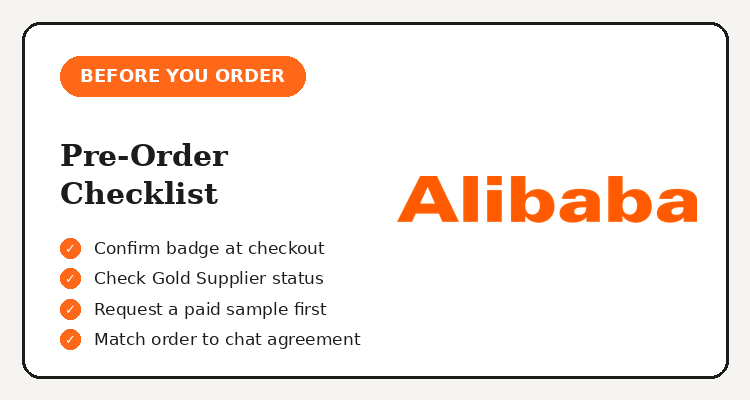
The protection itself is only half the process, the other half is making sure the order record actually reflects what you agreed to, since that record is what Alibaba checks during a dispute. Confirm the Trade Assurance badge and coverage amount show at checkout, not just on the listing. Request a paid sample before committing to a full production run, so you're not relying on Trade Assurance to catch a quality issue a small sample order would have caught first. Match the product specs, quantity, and price in the final order confirmation exactly to what the supplier agreed to in chat, since a mismatch there is what a dispute review actually compares against. And keep every message with the supplier inside Alibaba's own chat rather than moving the conversation to WhatsApp or email, since that history becomes part of your evidence if something goes wrong later.
What Trade Assurance Doesn't Cover
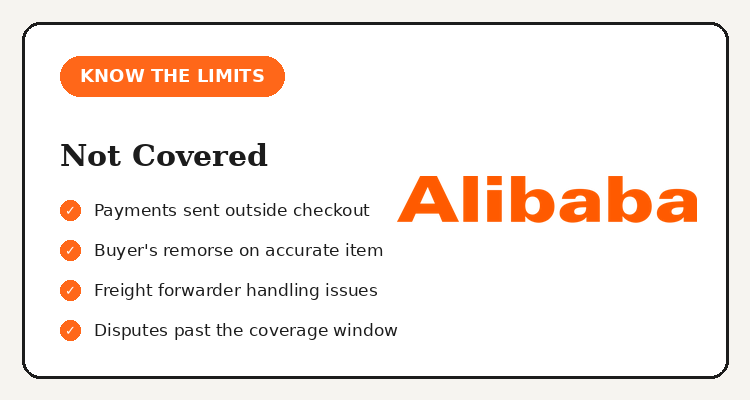
Coverage has real limits, and knowing them prevents assuming you're protected somewhere you're not. It doesn't cover buyer's remorse on a product that matches exactly what was ordered, changing your mind about a color or quantity after the fact isn't a dispute Trade Assurance was built to resolve. It doesn't extend to issues that begin after a freight forwarder takes possession of your shipment, once cargo moves from the supplier to third-party logistics arranged separately from Alibaba, delays or damage at that stage sit outside the platform's dispute process. And coverage runs on a window tied to your confirmed delivery date, shown on your specific order rather than one fixed number that applies to every purchase, so a dispute filed after that window closes generally can't be reopened.
Bottom Line
For a Filipino reseller or small business sourcing bulk inventory from an unfamiliar overseas supplier, Trade Assurance is the difference between a wire transfer you can't undo and a payment with an actual recourse path if the order doesn't show up the way it was agreed. Use it as intended: pay through Alibaba's own checkout, confirm the coverage shows before you pay, sample before you commit to volume, and keep the paper trail inside the platform, and it does what it's designed to do. For current sitewide discounts, new buyer offers, and Visa or Mastercard checkout bonuses on top of that protection, the Alibaba Philippines deals page tracks what's active this month. If retail-quantity sourcing without a minimum order requirement fits your business better than a bulk supplier order, Taobao's Philippines shopping deals cover that same category at single-item quantities.
Sourcing in bulk on Alibaba?
See current sitewide discounts and buyer vouchers on the Alibaba Philippines deals page.
See Alibaba Deals →