Why These Two Brands Solve Different Feeding Problems
Whiskas is one of the most widely recognized cat food names in the Philippines, built around an accessible everyday lineup of dry kibble and wet pouches that cover most mixed-breed cats without much label-reading needed. Royal Canin takes a more clinical approach, with formulas split by age, breed, and specific conditions like indoor weight management or sensitive digestion. Finding the best Whiskas or Royal Canin cat food for a Filipino household comes down to matching the formula to your cat's actual needs, not just grabbing whichever bag is closest to the register.
Both brands sell through their official Shopee stores in the Philippines, which makes it easier to confirm batch freshness and avoid a bag that has already been sitting past its ideal shelf life before it reaches checkout.
Life Stage and Indoor vs Outdoor, What the Labels Actually Mean
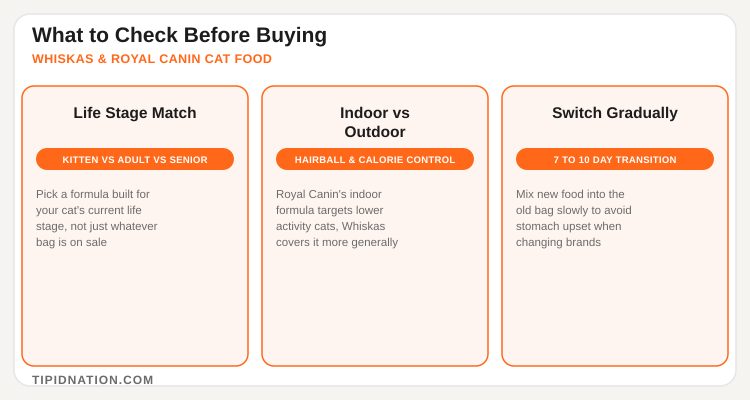
Kittens, adults, and senior cats have different calorie, protein, and calcium needs, which is why both brands split their core lineups by life stage rather than selling one formula for every age. Feeding an adult formula to a growing kitten, or skipping straight to senior food before a cat actually needs it, is one of the more common mismatches Filipino pet owners make when they buy whichever bag happens to be in stock.
Indoor versus outdoor matters almost as much for cats as life stage does. An indoor cat typically burns fewer calories and is more prone to hairballs from constant grooming, which is why Royal Canin's indoor-specific formula leans on lower calorie density and hairball control additives. Whiskas covers a similar need through its broader lineup, but with fewer narrowly targeted variants than Royal Canin offers.
Price Per Kilo vs Price Per Pouch
Whiskas generally covers more of its lineup at an accessible price point, which is part of why it remains a common everyday pick for multi-cat households or owners who go through food quickly with several cats sharing one feeding schedule. Royal Canin's breed and condition-specific lines usually sit at a higher price per kilo, reflecting the narrower, more targeted formulation behind each bag.
Comparing price per kilo rather than price per bag or pouch gives a clearer picture of real monthly cost, since recommended daily feeding amounts differ between the two brands and between dry and wet formats. A smaller, denser bag that lasts longer per feeding can work out cheaper over a month than a larger bag of a less calorie-dense formula, even if the sticker price looks higher at checkout.
Reading verified Whiskas and Royal Canin cat food reviews for November 2026 on the exact listing, rather than the general product description, is a more reliable way to judge real feeding amounts before committing to a larger pack size. Owners comparing pet food brands more broadly can also check Pedigree Philippines deals for a third reference point on everyday pricing.
Switching Between Brands Without Upsetting Your Cat's Stomach
A cat's digestive system adjusts to whatever protein source, fiber level, and fat content it has been eating consistently, which is why a sudden full switch between any two cat food brands is a common cause of loose stool, vomiting, or appetite loss, not a sign that either brand is low quality. The safer approach is a gradual transition over seven to ten days, mixing a small amount of the new food into the old bag and slowly increasing the ratio each day until the switch is complete.
This matters whether you're moving from Whiskas to Royal Canin for a health reason, or the other way around for budget reasons as you manage multiple cats on one shopping list. Watching stool consistency and appetite during the transition window is the simplest way to catch a reaction early, before committing to a full bag of either brand.
Pet owners managing a wider household budget around feeding, grooming, and vet visits can also read TipidNation's guide to saving on pet expenses, which covers vaccination drives, clinic pricing, and bulk food buying beyond just picking a brand.
Your 5-Step Cat Food Buying Guide
- Match the formula to your cat's life stage. Kitten, adult, and senior formulas cover different calorie and nutrient needs.
- Check whether your cat is mostly indoor. Indoor-specific formulas account for lower activity and hairball control.
- Compare price per kilo, not per bag or pouch. Feeding amounts and formats differ enough to change the real monthly cost.
- Buy through an official store listing. Freshness and proper storage affect kibble and pouch quality more than most shoppers expect.
- Switch gradually if changing brands. Mix the new food into the old bag over seven to ten days to avoid stomach upset.
Frequently Asked Questions
Active deals and discounts on Whiskas and Royal Canin cat food, updated regularly on TipidNation.