Why These Two Brands Solve Different Feeding Problems
Royal Canin built its name on breed and size-specific formulas, kibble shaped differently for a bulldog's bite than for a chihuahua's, alongside a veterinary line for dogs with specific health conditions. Purina is better known in the Philippines for a broader, more accessible lineup that spans puppy, adult, and senior life stages at a range of price points, from everyday dry kibble to wet food and treats. Finding the best Royal Canin or Purina dog food for a Filipino household comes down to matching the formula to your dog's size, age, and any specific condition, not just picking whichever bag is cheaper that week.
Both brands sell through their official Shopee stores in the Philippines, which makes it easier to confirm batch freshness and avoid a bag that has already sat past its ideal shelf life before reaching checkout.
Life Stage and Breed Size, What the Labels Actually Mean
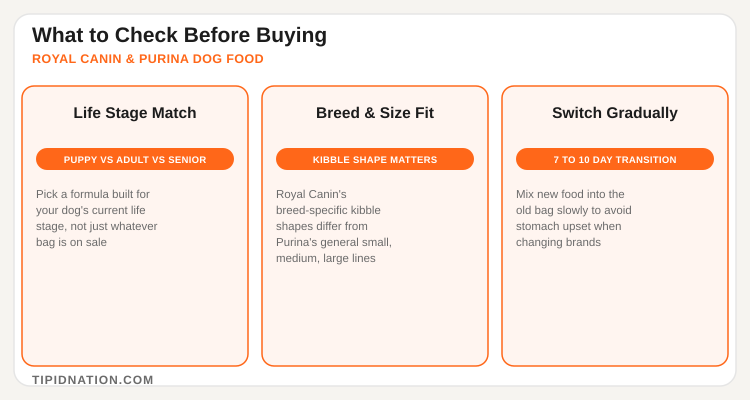
Puppies, adults, and senior dogs have different calorie, protein, and calcium needs, which is why both brands split their core lineups by life stage rather than selling one formula for every age. Feeding an adult formula to a growing puppy, or a puppy formula to an older dog long past its growth phase, is one of the more common mismatches Filipino pet owners make when they buy whichever bag is in stock rather than checking the label.
Breed size matters almost as much. A large-breed puppy formula is typically built to slow bone growth and reduce joint strain later in life, while a small-breed formula accounts for a faster metabolism and smaller kibble size that is easier to chew. Royal Canin pushes this further with individual breed-specific lines for some of the most common breeds kept in the Philippines, while Purina's size-based segmentation, small, medium, and large breed, covers the same general need with fewer specific variants.
Price Per Kilo vs Price Per Bag
Purina generally covers more of its lineup at an accessible price point, which is part of why it remains a common everyday pick for multi-dog households or owners feeding larger breeds that go through a bag faster. Royal Canin's breed and condition-specific lines usually sit at a higher price per kilo, reflecting the narrower, more targeted formulation behind each bag.
Comparing price per kilo rather than price per bag gives a clearer picture of real cost, since bag sizes and recommended daily feeding amounts differ between the two brands. A smaller, denser bag that lasts longer per feeding can work out cheaper over a month than a larger bag of a less calorie-dense formula, even if the sticker price looks higher at checkout.
Reading verified Royal Canin and Purina dog food reviews for November 2026 on the exact listing, rather than the general product description, is a more reliable way to judge real feeding amounts and value per bag before committing to a larger pack size.
Switching Between Brands Without Upsetting Your Dog's Stomach
A dog's digestive system adjusts to whatever protein source, fiber level, and fat content it has been eating consistently, which is why a sudden full switch between any two dog food brands is a common cause of loose stool, gas, or appetite loss, not a sign that either brand is low quality. The safer approach is a gradual transition over seven to ten days, mixing a small amount of the new food into the old bag and slowly increasing the ratio each day until the switch is complete.
This matters whether you're moving from Purina to Royal Canin for a breed-specific reason, or the other way around for budget reasons as your dog grows out of a smaller bag size. Watching stool consistency and appetite during the transition window is the simplest way to catch a reaction early, before committing to a full bag of either brand.
Pet owners managing a wider household budget around feeding, grooming, and vet visits can also read TipidNation's guide to saving on pet expenses, which covers vaccination drives, clinic pricing, and bulk food buying beyond just picking a brand.
Your 5-Step Dog Food Buying Guide
- Match the formula to your dog's life stage. Puppy, adult, and senior formulas cover different calorie and nutrient needs.
- Check the breed size segment. Small, medium, and large breed formulas account for different growth rates and kibble size.
- Compare price per kilo, not per bag. Feeding amounts and bag sizes differ enough to change the real monthly cost.
- Buy through an official store listing. Freshness and proper storage affect kibble quality more than most shoppers expect.
- Switch gradually if changing brands. Mix the new food into the old bag over seven to ten days to avoid stomach upset.
Frequently Asked Questions
Active deals and discounts on Royal Canin and Purina dog food, updated regularly on TipidNation.