Why Diaper Spending Is Easy to Overlook
A single pack of diapers looks like a small purchase, but a growing baby goes through enough changes a day that the monthly total adds up quickly, and it keeps adding up for roughly two to three years. Most households buy diapers reactively, grabbing whatever pack is in stock the moment the current one runs low, which almost always means paying full retail price instead of planning around a best Huggies, Pampers, and Drypers Philippines deal that was already sitting online.
Treating diapers like a recurring grocery line item, something to plan and restock on a schedule rather than buy on impulse, is one of the simplest ways to turn a predictable monthly expense into a smaller one.
Huggies Deals: Where the Savings Actually Show Up
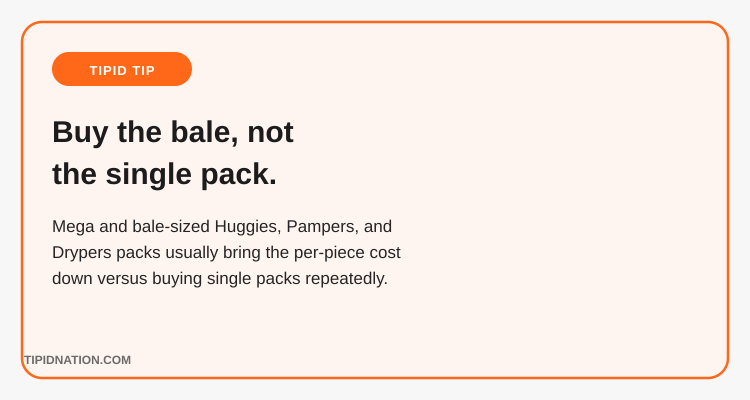
Huggies's mega and jumbo pack sizes carry a noticeably lower per-piece cost than its smaller trial or travel packs, which makes them the better buy once a household has already confirmed the right size for a baby. Because Huggies tends to sit at a premium price point overall, the gap between a small pack and a bale-sized bundle on its official online store is usually where the real savings live, rather than in any single-pack discount.
Bundling a Huggies restock with a planned shopping day, instead of a one-off emergency purchase, also makes it easier to catch a store-wide voucher or free-shipping threshold that a single pack alone would not reach.
Pampers Deals: What to Check Before Restocking
Pampers covers one of the widest size ranges on shelf, from newborn through toddler, which means the better deal is often tied to buying the right size in bulk rather than the smallest convenient pack. Multi-pack bundles on its official store typically bring down the cost per piece meaningfully compared to single packs bought one at a time from a grocery or pharmacy.
Parents stocking up for a newborn stage, where sizing can change quickly in the first few months, may still want to buy a smaller pack first to confirm fit before committing to a full bale in that size.
Drypers Deals: Built for Bulk Buying
Drypers already positions itself around value, so its bale-sized packs are where the deal math is most favorable for households managing frequent daytime changes on a tighter monthly budget. Buying Drypers in bulk, rather than restocking a small pack repeatedly, is usually the single biggest lever for cutting the overall monthly diaper spend.
Because Drypers already runs at a lower baseline price than Huggies or Pampers, even a modest additional discount on a bale-sized bundle can meaningfully change the per-piece cost over a full month of use.
Timing a Restock Around the Sales Calendar
Official brand stores on marketplaces like Shopee Philippines deals and Lazada Philippines deals run diaper promos on a rolling basis, but the bigger drops typically land around major shopping events and payday sale windows, when store-wide vouchers and brand discounts stack on top of each other. A household that already knows roughly how many packs it goes through monthly can use that predictability to its advantage, buying slightly ahead of running out instead of restocking at full price under pressure.
Current Huggies, Pampers, and Drypers Philippines deals shift often enough that it is worth a quick check before any planned restock, rather than assuming the last price seen is still the current one.
A Simple Monthly Diaper Budget Routine
A practical routine many households settle into looks like this: Drypers in bulk for the bulk of daytime changes, since those happen often enough that premium features matter less, and Huggies or Pampers reserved for overnight wear, travel, or the newborn stage, where fit and absorption claims matter more. Splitting the monthly diaper budget across brands this way, instead of buying one brand for every situation, tends to lower the overall spend without giving up the features that matter most at each stage.
The other half of the routine is simply checking current pricing across all three brands before a restock rather than defaulting to habit. Prices move often enough between pack sizes and ongoing promos that the cheapest option this month is not guaranteed to be the cheapest option next month.
It also helps to keep a rough running count of how many packs a household actually uses in a typical month, rather than guessing. Once that number is known, a single bulk order timed around a sale event can cover several weeks at once, which cuts down on both the number of individual purchases made and the number of times a household ends up paying full price out of simple convenience. Over the course of a year, that habit alone can make a noticeable dent in total baby care spending, money that can go toward other essentials instead.
Frequently Asked Questions
Active deals and discounts for all three diaper brands, updated regularly on TipidNation.