Three Diaper Brands, Three Different Priorities
Huggies, Pampers, and Drypers get compared constantly because they share the same shelf space and the same job, keeping a baby dry and comfortable, but each one is built around a different priority. Huggies is built around thin-fit absorption technology designed for overnight sleep and babies who are already crawling or walking. Pampers is built around everyday softness and the widest size range on shelf, from newborn through toddler. Drypers is built around value, keeping cost per piece low for families managing a diaper budget across multiple changes a day.
Once that split is clear, the real question is not "which brand is better" but which priority, overnight protection, everyday softness, or budget stretch, matters most for a given stage of a baby's growth.
Huggies, Best for Overnight Wear and Active Babies
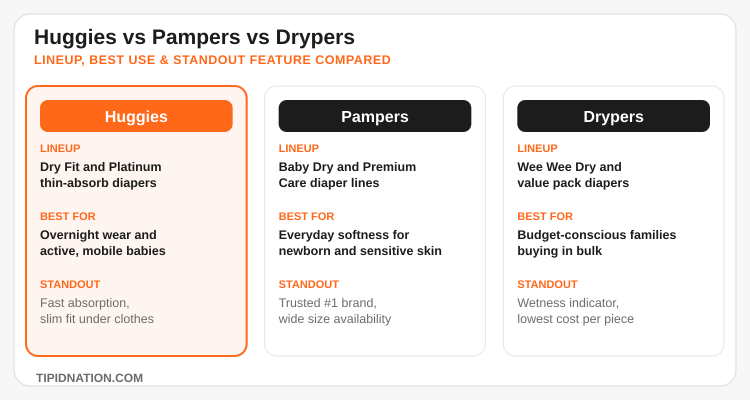
Huggies's lineup centers on its Dry Fit and Platinum lines, diapers built around a thinner, more absorbent core meant to pull moisture away from skin quickly and hold it over a longer stretch without feeling bulky. That focus is a common reason Filipino parents reach for Huggies specifically at bedtime, since the brand is formulated with longer overnight wear in mind rather than purely for daytime comfort.
The tradeoff is that Huggies typically sits at a higher price point per piece than a value-focused brand, which is where it earns the strongest loyalty from parents comparing a best Huggies Philippines diaper deal on overnight packs against other premium brands rather than against budget options.
Pampers, Best for Newborn Softness and Size Range
Pampers's strength is everyday comfort, Baby Dry and Premium Care lines built around soft materials gentle enough for newborn skin, with one of the widest size ranges on shelf covering newborn through toddler stages. Its broad availability across groceries, pharmacies, and online stores makes it a practical default for households that want one brand to follow a baby through most of the early growth stages without switching repeatedly.
The caveat is that Pampers is not specifically built around the same overnight-focused absorption technology that Huggies Philippines deals on Dry Fit packs lead with. Its formulas cleanse and absorb well for everyday use but are positioned around softness and size coverage rather than a dedicated long-stretch overnight claim. Parents stocking a full nursery can also check TipidNation's Fisher-Price Philippines baby essentials deals for feeding and care items, or restock diaper bales at once through Puregold Philippines grocery deals for bundle pricing.
Drypers, Best for Budget-Conscious Bulk Buying
Drypers's Wee Wee Dry and value pack lines are built around keeping the cost per piece as low as possible without skipping the basics, absorption, a wetness indicator strip, and a comfortable everyday fit. For Filipino households managing a tight monthly budget with multiple changes a day, Drypers is a practical way to stretch the diaper allocation further, especially when bought in bale-sized packs rather than single small packs.
The tradeoff is that Drypers does not usually market itself around the same premium thin-fit or overnight-specific technology as Huggies or Pampers, which is why many households treat it as the daytime workhorse brand and reserve a premium pack for overnight or travel days when a longer stretch between changes matters more.
Building a Diaper Routine With All Three
A routine that pairs all three brands maps onto how many Filipino households already manage a baby's diaper stock. Drypers covers the bulk of daytime changes, when diapers get swapped frequently anyway and premium absorption matters less. Huggies covers overnight sleep and long outings, when a longer stretch between changes actually makes a difference. Pampers often becomes the newborn-stage default or the travel pack, chosen for its softness and consistent size availability. This split lets each brand stick to the priority it is actually built for instead of expecting one pack to cover every situation at the same cost.
Budget plays into this pairing directly. Buying Drypers in bulk for daytime use and reserving Huggies or Pampers for overnight and special-occasion changes typically costs less over a month than using a single premium brand for every change, which is part of why this three-way split shows up often in budgeting advice for new parents.
Which Should You Buy?
If the priority is overnight protection and fewer middle-of-the-night changes, start with Huggies. If the priority is newborn-friendly softness and a wide size range as the baby grows, start with Pampers. If the priority is stretching a tight monthly budget across frequent daytime changes, start with Drypers. Many Filipino households eventually land on a mix of all three, matching each brand to the moment it actually fits best rather than committing to one brand for every situation.
First-time buyers of any of the three should also factor in that fit varies by baby, not just by brand claim. A baby who leaks overnight in one brand's size may do fine in another brand's equivalent size, since cut and stretch differ slightly between manufacturers. Buying a small trial pack in a new size or brand before committing to a mega box or bale is a simple way to confirm fit before buying in bulk.
Pricing also moves regularly between the three depending on pack size, bale deals, and ongoing promos, so there is no fixed cheapest option at all times. Checking current pricing on all three before a big restock, especially around payday sales, is worth the extra few minutes it takes, since bale-sized bundles on any of the three brands can bring the per-piece cost down meaningfully compared to buying single packs.
Frequently Asked Questions
Active deals and discounts for all three diaper brands, updated regularly on TipidNation.