AppSumo built an entire marketplace around one pitch: pay once, use a piece of software for as long as the vendor keeps it alive, skip the recurring subscription. That pitch is genuinely good when the product behind it holds up. It's also the exact setup a struggling startup can use to raise fast cash from a batch of one-time sales before the product quietly stalls. Both kinds of listing use the same badges, the same countdown timers and the same "today only" framing, so the marketplace itself won't tell you which one you're looking at. The product's own track record will.
What a "Lifetime Deal" Actually Promises
A lifetime deal is a one-time payment for ongoing access to a specific plan tier of a software product, for as long as that vendor keeps the product running. It is not a guarantee that every feature the company ever ships lands in your tier automatically, and it is not protection against the vendor shutting down. Read the plan comparison on the listing itself: usage caps, seat limits, and which integrations are locked to higher tiers all live in that table, not in the headline discount percentage.
The other number worth checking before anything else is the refund window. AppSumo lifetime deal refund policy terms typically give you 60 days to actually run the tool through your real workflow, not just the sales demo, which is enough time to catch most of the problems covered below. A shorter window on a specific listing is itself a small signal worth noticing.
Signs a Deal Is Worth Buying
- Active changelog with real updates in the last few months
- Clear, stated usage limits per tier, not vague or shifting caps
- A real team behind it, not a single developer's side account
- Works without full dependence on one third-party API that could get cut off
- The vendor actually replies to comments and support tickets
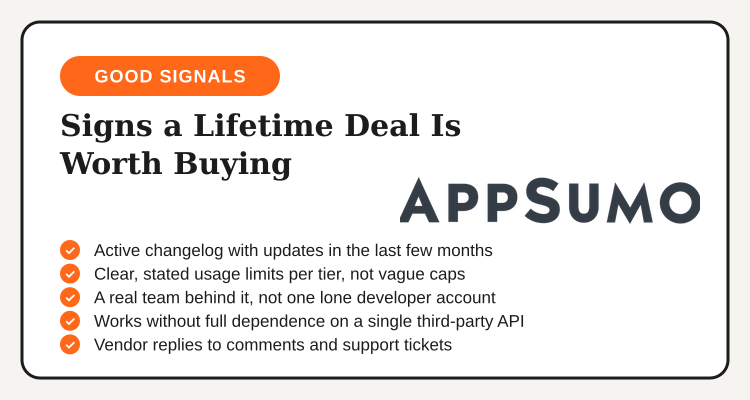
The signals that matter more than the discount percentage shown on the listing
Red Flags That Signal a Dud
A dud rarely announces itself. The landing page copy still reads well, the screenshots still look polished, and the discount is still large enough to catch your attention. What's missing is usually buried a few scrolls down, in the comments section the vendor hasn't touched in months, or in a changelog that stopped updating right around the time the AppSumo campaign started.
Watch for a product whose core feature leans entirely on a free tier of another company's API. That dependency can get throttled, priced out, or cut off at any point, and when it does, your "lifetime" access to the wrapper around it stops meaning much. A single founder answering every support request alone is not automatically a bad sign on a small tool, but a single founder who has stopped answering is.
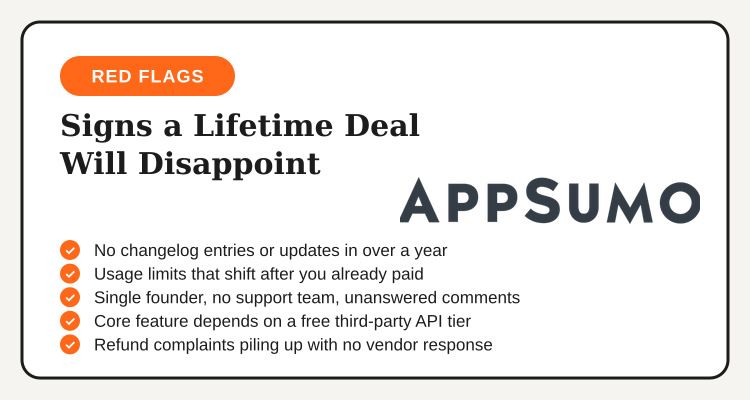
Any one of these alone is worth a second look. Two or more together is a pass.
How to Evaluate a Deal Before You Buy
None of this takes long, and all of it happens before you enter a card number. Vetting AppSumo lifetime deals before buying comes down to a short, repeatable routine rather than a gut call on the listing page.
- Read the comments section, not just the listing copy. Buyers who have used the tool for weeks will flag bugs, missing features, or support gaps the sales page won't mention.
- Check the vendor's own site and socials. A company with a real history outside the AppSumo campaign page is a different bet than one that appeared the week the deal launched.
- Test inside the refund window, not after it. Build your actual workflow in the tool during those first weeks instead of letting the window quietly expire before you try it properly.
- Match the tier limits to what you need. Buying the biggest tier "just in case" defeats the point of a lifetime deal being a budget move in the first place.
- Check the fine print on future plan changes. Some deals convert to a paid plan later for new feature access, which matters if the roadmap is the reason you're buying.
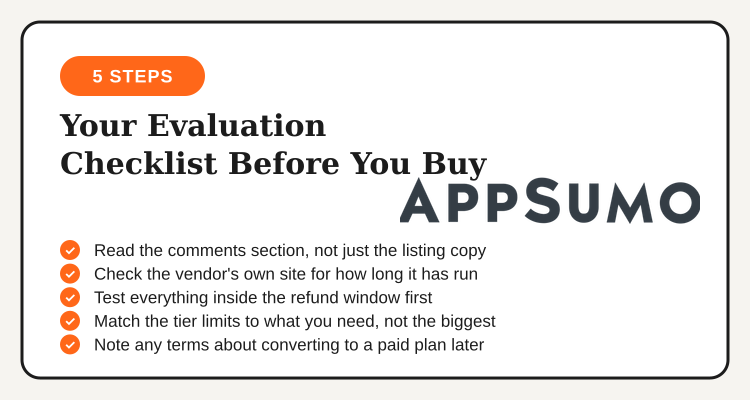
Five checks that take minutes and catch most of the problems covered above
Where This Fits for Filipino Founders and Freelancers
Most software subscriptions are billed in USD, and the peso cost of a recurring monthly plan creeps up every time the exchange rate moves against you. A one-time lifetime payment sidesteps that entirely, which is a real reason the model appeals to solo founders, freelancers, and small teams building out a marketing or content stack piece by piece. The savings only show up if the tool is still running two or three years in, which is exactly why the checks above matter more here than they would on a monthly plan you can cancel anytime.
Pairing a solid AppSumo pick with domain and hosting basics rounds out a starter stack without the recurring cost stacking up across every tool at once. Filipino founders setting up a new site alongside a lifetime deal often check GoDaddy Philippines domain and hosting deals at the same time, since both tend to get shopped together during the same setup pass.
See current AppSumo deals for the Philippines
Active lifetime and limited-time listings for Filipino founders and freelancers, tracked on the AppSumo Philippines deals page.
View AppSumo Deals →