Most Filipinos start with a Visa or Mastercard. Amex, JCB and Diners Club are different card networks, and knowing the difference helps you spend smarter and avoid paying for perks you will not use. This guide is general information, not financial advice, and every card's fees and rewards are set by its issuing bank.
Network vs Issuer: What Is the Difference?
The network moves the payment and decides where the card can be used. The issuer is the bank that approves you, sets your credit limit and chooses the annual fee, rewards and promos. Two cards on the same network can feel very different because the banks behind them differ. So when you compare Amex, JCB and Diners Club, you are really asking two questions: will merchants take it, and does the issuing bank offer perks you will use?
Acceptance: Philippines vs Abroad
Visa and Mastercard are the most widely accepted networks, both locally and overseas. Amex, JCB and Diners Club are generally accepted at malls, hotels, restaurants and larger merchants, but smaller shops and some online stores may not take them. Overseas, JCB is often strongest in Japan and parts of Asia, while Amex and Diners Club tend to be better received at hotels, airports and bigger merchants in major cities. Acceptance changes by country and merchant, so treat this as a rule of thumb and keep a Visa or Mastercard as backup.
Amex vs JCB vs Diners Club at a Glance
| Amex | JCB | Diners Club | Visa / Mastercard | |
|---|---|---|---|---|
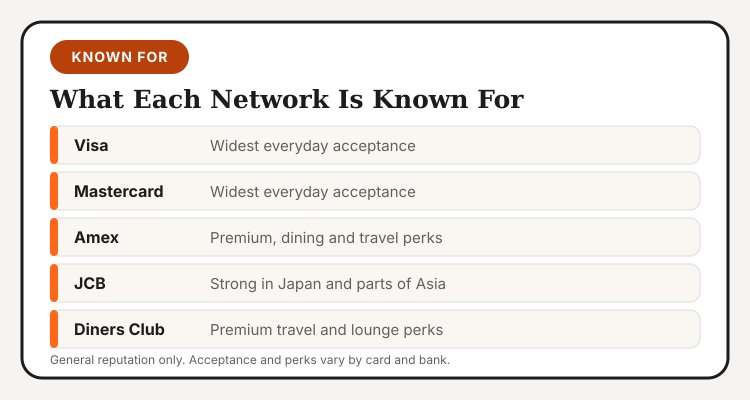
| Best known for | Premium, dining and travel perks | Japan and parts of Asia | Premium travel and lounge perks | Everyday, online and global use |
| Everyday acceptance in the Philippines | Narrower than Visa or Mastercard | Narrower than Visa or Mastercard | Narrower than Visa or Mastercard | Widest |
| Acceptance abroad | Strong in major cities, hotels and big merchants | Strongest in Japan, patchier in the West | Strong at hotels, restaurants and airports | Widest |
| Typical perks | Dining, travel, rewards (varies by card) | Japan shopping and dining (varies by card) | Lounge and travel (varies by card) | Cashback, rewards, installments (varies by card) |
| Fees | Set by the issuing bank | Set by the issuing bank | Set by the issuing bank | Set by the issuing bank |
| Read more | American Express | JCB | Diners Club | Visa, Mastercard |
We do not list fees or reward rates because they depend on the card and issuing bank. Confirm the current annual fee, rewards and promo terms with the bank before you apply.
Typical Perks: Travel and Dining
Perks vary by card, but patterns exist. Premium cards on the Amex and Diners Club networks are often marketed around dining, travel and lounge benefits. JCB cards are often promoted for Japan trips and outlet shopping. Visa and Mastercard cards more commonly lean on cashback, installments and online-shopping promos. Do not assume a perk exists because the network is known for it. Read the card's benefits page, and see our best cashback credit cards guide for the everyday side of the picture.
Browse current card offers
Offers change often, so check each page before you apply.
American Express offersJCB offersDiners Club offersHow They Differ From Visa and Mastercard
The biggest gap is reach. Visa and Mastercard work at the widest range of merchants, so they make the best primary cards. The other three are better treated as specialist add-ons. They can reward a specific lifestyle, but they work best alongside a card that is accepted almost everywhere.
When a Second Network Card Makes Sense
- You travel to Japan or Asia often and want a card with perks tied to those trips.
- You dine out or fly enough that dining or lounge benefits could offset an annual fee.
- You already have a Visa or Mastercard as your main card, so acceptance gaps do not matter.
- You can pay your balance in full, so extra perks are not outweighed by interest.
If none of these fit, a single well-chosen Visa or Mastercard is usually simpler and cheaper to manage.
Decision Checklist
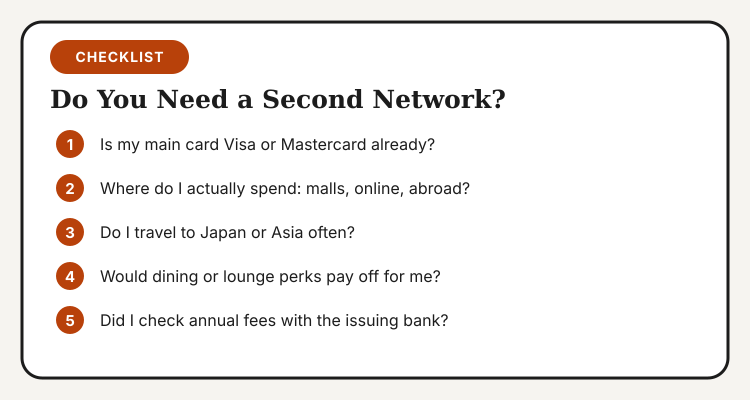
- Do I already have a Visa or Mastercard for everyday spending?
- Where do I actually spend: malls, online or abroad?
- Will I use the dining, travel or lounge perks often enough?
- Have I checked the annual fee and terms with the issuing bank?
- Can I pay the full balance each month?
Compare card networks before you apply
Start with the two everyday networks, then add a specialist card if it fits.
Visa dealsMastercard deals