inDrive vs Grab: The Core Difference
Grab prices a trip the way most Filipino commuters already expect. Enter your pickup and destination, the app runs its pricing algorithm, and you get a fixed fare before you confirm the booking. That fare might move with demand, traffic, or time of day, but you're accepting a number the app already decided, not negotiating one.
inDrive works from the opposite direction. You propose what you're willing to pay, and nearby drivers can accept your offer, send back a counter-price, or decline it outright. It's the closest thing to haggling that ride-hailing in the Philippines currently offers, and it puts a real amount of control back in the rider's hands, provided you're willing to wait a bit longer for a match.
How inDrive's Fare Negotiation Actually Works
Booking starts the same way it would on any ride-hailing app: set your pickup point, enter your destination, and the app shows a suggested fare range based on distance and current demand. From there, you can accept that suggestion or type in your own offer, whether that's slightly lower to test the waters or right in line with what similar trips typically go for.
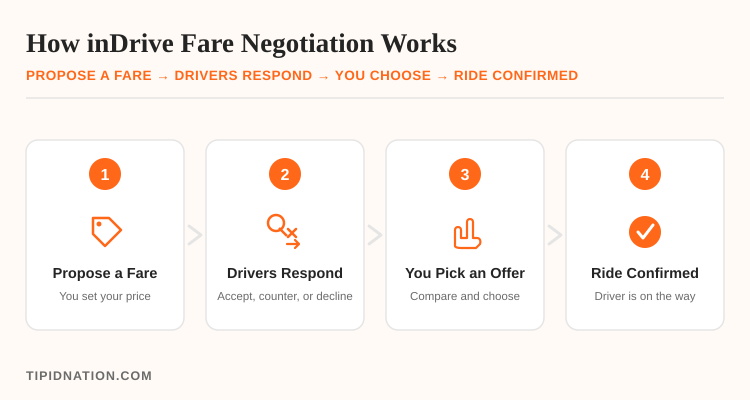
Once your offer goes out, nearby drivers see it and respond in one of three ways: accept it as-is, send back a counter-offer with a different price, or pass on it entirely. You're free to compare multiple responses before confirming, so it's worth waiting for a second or third offer rather than locking in the first reply, especially if your opening fare was on the low side.
When Grab's Fixed Pricing Wins
Negotiation isn't automatically the better deal. On short, predictable trips, particularly during off-peak hours, Grab's algorithm often already lands on a fare that's hard to beat, and you skip the back-and-forth entirely. Grab also has the deeper driver network, so wait times in well-covered areas like Makati, BGC, and Ortigas tend to be shorter, which matters more than a few pesos of savings when you're running late.
If you're the type of rider who wants to book and go without checking counter-offers, or you're traveling somewhere outside Metro Manila where Grab's coverage runs deeper than inDrive's, the fixed-fare model is simply the more convenient choice. The best inDrive Philippines promo code strategy is really about knowing which trips are worth negotiating and which ones aren't.
inDrive vs Grab: Side-by-Side
| Feature | inDrive | Grab |
|---|---|---|
| Pricing Model | You propose the fare | Fixed, algorithm-set |
| Vehicle Types | Car & motorcycle | Car & motorcycle |
| Coverage | Metro Manila + major cities | Nationwide |
| Booking Speed | Slower, may take counter-offers | Fast, one-tap confirm |
| Payment Methods | GCash, Maya, card, cash | GCash, Maya, card, cash |
Which App Is Actually Cheaper for Your Trip
The honest answer is that it depends on the trip, so it helps to think in categories rather than picking one app as the permanent winner:
- Short, everyday trips (under 15 minutes): Grab's fixed fare is usually quick and competitive enough that negotiating on inDrive saves little for the extra wait.
- Longer cross-city trips: inDrive's negotiation tends to have more room to work with, since the base fare gap between a low and high offer widens with distance.
- Rush hour bookings: Both apps price higher, but inDrive lets you test whether drivers will accept a fare below the surge-adjusted number Grab shows.
- Late-night or low-availability areas: Grab's larger driver pool typically means a faster match, which can matter more than a marginal fare difference.
- Motorcycle commutes: Both apps offer two-wheel rides, but dedicated motorcycle apps often edge out on base fare for short city hops.
A quick habit worth building: open both apps, check the fare estimate on Grab, then see what inDrive suggests before you propose your own number. That comparison takes under a minute and tells you immediately which app has the edge for that specific trip.
Booking, Safety and Payment Basics
Both apps run standard rider protections common across Philippine ride-hailing platforms: driver background checks, in-app trip tracking, and the option to share your live location with someone you trust. Before confirming a ride on either app, check that the driver's name, vehicle, and plate number shown in-app match what actually arrives.
Payment flexibility is similar too. inDrive and Grab both accept GCash, Maya, and major debit or credit cards linked in-app, with cash still available for select trips depending on the driver and route. Neither app requires memorizing a code string to unlock a discount, current offers usually apply automatically once you meet the qualifying condition, whether that's a first booking, a linked card, or an off-peak departure window.
Bottom Line
There's no single winner between inDrive and Grab, because they're solving the pricing problem in opposite ways. Grab optimizes for speed and predictability with a fixed fare you can accept in seconds. inDrive optimizes for control, letting you set the number and see who's willing to take it, at the cost of a slightly longer booking flow.
The smartest approach for most Metro Manila commuters is running both apps side by side, at least until a pattern emerges for the routes you take most. Short, familiar trips tend to favor Grab. Longer or off-peak trips are where inDrive's negotiation has the most room to actually pay off.
See all active inDrive promo codes
Welcome discounts, card-linked offers, and ride credit vouchers, updated regularly on the inDrive Philippines deals page.
View inDrive Deals →